Quick Summary
- Choosing between a membrane and chamber filter press is a long-term bet on throughput, labor, and disposal costs—not just cake dryness.
- Membrane presses can cut cycle times by up to 75% and slash disposal costs with drier cake, but carry a higher upfront cost and more complex maintenance. Chamber presses are budget-friendly workhorses, yet often lock you into higher operating expenses when hauling and throughput are fully factored in.
- To avoid a costly mistake, calculate total cost of ownership, consider a mixed-pack configuration for value, and always pilot-test your specific sludge.
Membrane filter press vs chamber filter press—if you’re a plant manager, process engineer, or anyone responsible for solid-liquid separation, this is likely the most expensive “either/or” decision you’ll face this year.
And it’s not even close.
Most people think the choice is all about getting a drier cake. But here’s the real story: it’s a long-term bet on throughput, labor, and disposal costs. Pick wrong, and you’re locked into higher operating expenses for a decade or more.
In this guide, as a professional filter press manufacturer, I’m going to break down the seven critical differences between these two technologies—without the fluff, without the sales pitch. Just the stuff that actually moves the needle for your bottom line.
Sound good? Let’s dive in.
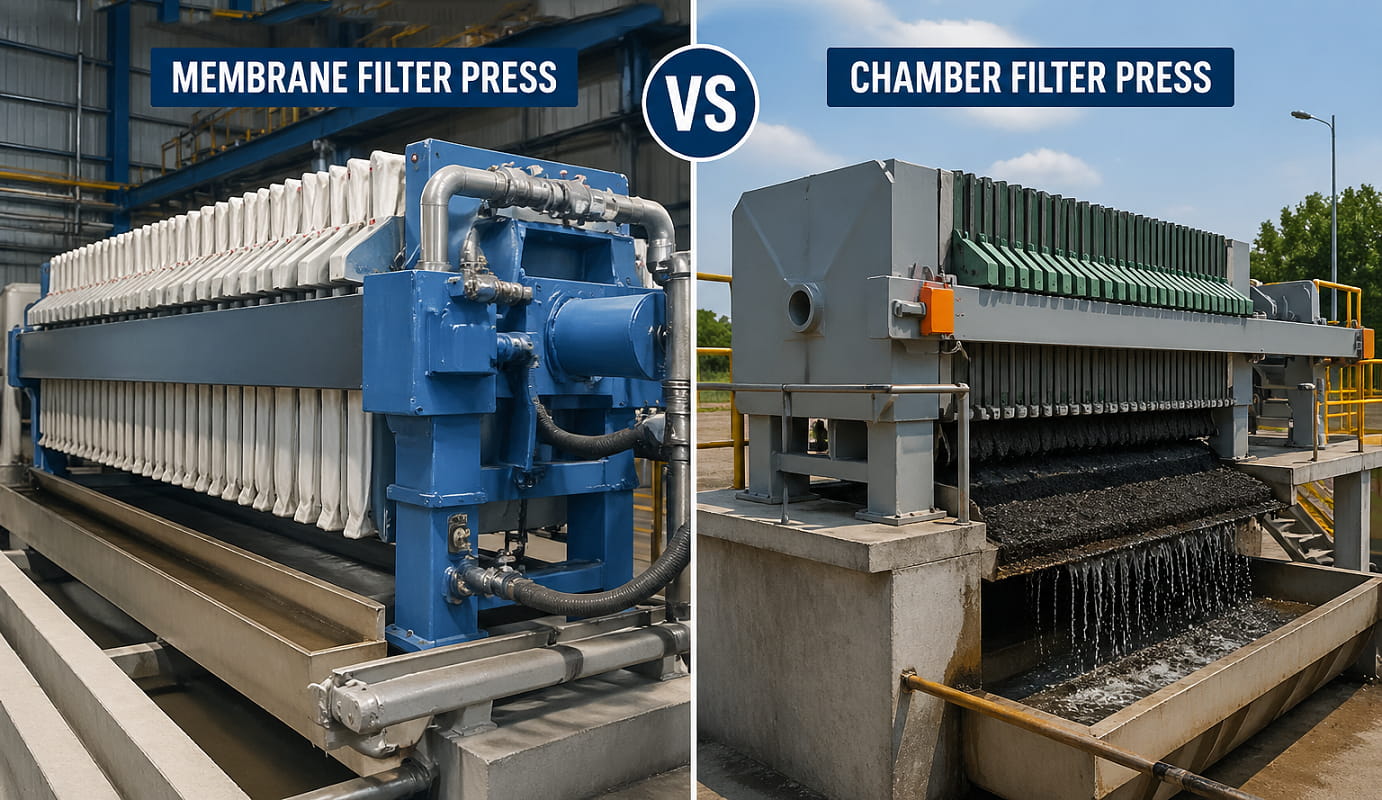
The Architectural Divide: How They Actually Work
Here’s the core functional difference in plain English:
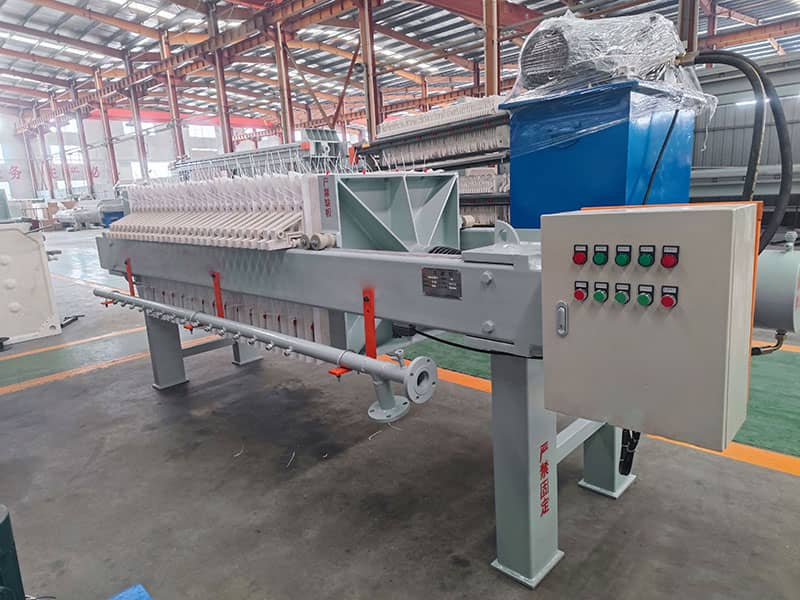
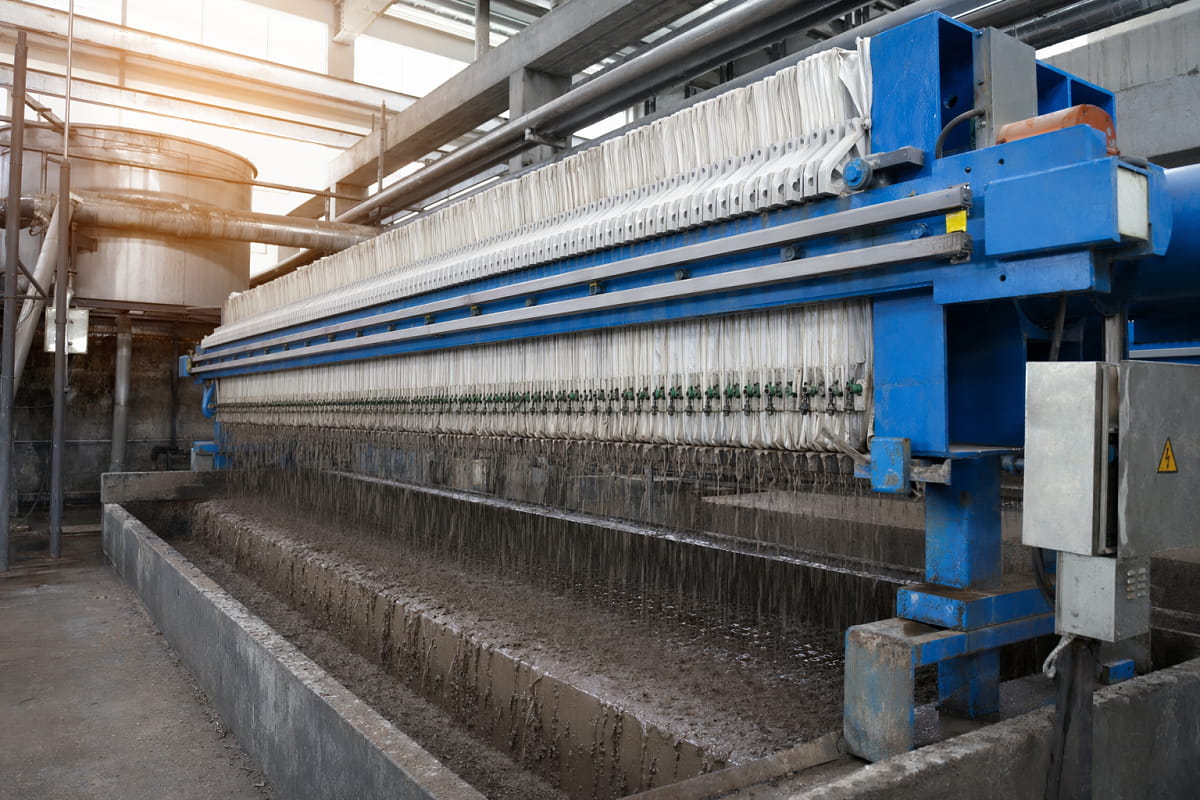
A chamber filter press (sometimes called a recessed chamber filter press) uses solid, recessed plates. Slurry gets pumped in, pressure builds, and the liquid gets squeezed through the filter cloth. That’s it. Dewatering relies entirely on feed pump pressure—usually somewhere between 7 and 15 bar. Once the chambers are full, the process stops. There’s no second act.
A membrane filter press takes that same initial filtration step and then adds a mechanical secondary squeeze. After the cake forms, a flexible diaphragm inside the plate inflates—typically with water (sometimes with compressed air, but more on that later) at 15–30 bar. This diaphragm physically compresses the cake, forcing out significantly more liquid.
Think of it this way: a chamber press is like letting a wet sponge drain under its own weight. A membrane press is like wringing that sponge out with your hands.
That single design difference creates a ripple effect across everything that matters: dryness, cycle time, maintenance, and total cost.
Membrane vs Chamber Filter Press
1. Cake Dryness
If you’re paying by the ton for transport and landfill, cake moisture is your number one lever. And this is where the membrane press absolutely shines.
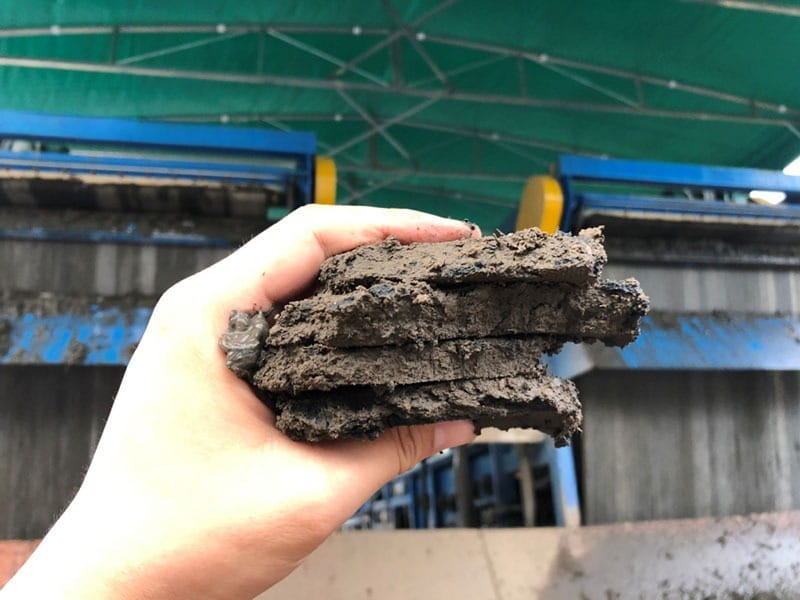
In a chamber press, the final dryness is determined purely by how long you can keep the feed pump running—and how permeable your solids are. Typically, you’re looking at a moisture content somewhere between 50% and 75%. Not terrible, but if you need to haul that cake away, you’re paying to move a lot of water.
A membrane press, on the other hand, can push that number way down. For mineral-based sludges—think lime-conditioned tailings—you’re often talking about a cake dryness improvement of 4–5 percentage points. That might not sound like much, but it can mean a 30% reduction in volume. For polymer-conditioned organic sludges, the gain is more modest (2–3 points), but you also get more consistent cake release.
The bottom line? If your disposal costs are even moderately high, the membrane press can pay for its premium in reduced hauling fees alone.
2. Cycle Time & Throughput
Here’s where the membrane press turns into a financial weapon.
Because that high-pressure squeeze eliminates water so quickly, the overall filtration cycle is drastically shorter. I’m not talking 5% or 10% faster. Industry data shows that membrane presses can cut total cycle time by approximately 50%—and in some cases, by as much as 75%.
What does that mean for your plant? Simple: more batches per day. Higher throughput capacity. Same footprint, same number of operators, way more cake out the door.
A chamber press, meanwhile, has to keep pumping against an increasingly dense cake. That last bit of water takes forever to remove. So your process is slower, and your daily capacity is capped.
If your operation is scaling up and you’re bumping against deadlines, a membrane press can literally keep you from having to buy a second machine.
3. Capital & Operating Costs
Let’s talk money. Upfront and over time.
A chamber filter press wins the capital expenditure battle hands-down. It’s a simpler machine—solid plates, fewer components, no need for a high-pressure squeeze system. If you’re on a tight budget, it’s the obvious choice.
But here’s the trap: cheap upfront ≠ cheap long-term.
Membrane presses command a higher initial price because of those complex membrane plates, the hydraulic or pneumatic systems, and the advanced controls needed for the multi-stage cycle. However, the total cost of ownership often flips the narrative. Drier cake means lower disposal costs. Faster cycles mean more throughput per shift. And in some applications, you can eliminate a downstream drying step entirely, slashing energy consumption by 40–60%.
Pro Tip: Don’t just compare sticker prices. Model your TCO over 5 or 10 years, factoring in labor, energy, maintenance, and hauling. You might be surprised which one comes out ahead.
4. Operational Flexibility
Not all sludge is created equal. Some days your feed is thick; other days it’s thin. If your process is variable, this section matters.
A chamber press is rigid. It demands that chambers be completely filled with solids to form a proper cake. Under-fill even one chamber, and you get uneven cakes, poor performance, and a mess at discharge. There’s no wiggle room.
A membrane press? Total game-changer. The inflatable diaphragm can expand to contact and evenly squeeze a partially filled chamber. This means you can handle inconsistent sludge dewatering loads without a hitch. It also makes the press more forgiving during startup and shutdown phases.
The bottom line? If your feed solids concentration fluctuates, the membrane press will save your operators a lot of headaches.
5. Maintenance & Lifespan
Reliability profiles differ sharply.
Chamber presses are workhorses. Solid plates, no moving parts inside the chambers. As long as you manage feed pressure and replace filter cloth as needed, they’ll run for years. Maintenance demands are low, predictable, and cheap.
Membrane presses? More complexity, more potential failure points. The membranes themselves are wear items. And here’s the critical design choice that shapes your long-term operating costs: welded plates vs. removable diaphragms. If a welded membrane fails, you’re often looking at replacing the entire plate—ouch. Removable bladder systems let you swap out just the diaphragm, which is far cheaper.
Also, let’s talk safety. If you’re inflating the membrane with compressed air, a rupture can be dangerous. Most reputable manufacturers recommend water inflation for this reason. It’s a small detail that can prevent big problems.
My advice? If you go membrane, pay attention to the diaphragm replacement design and always use water as the squeeze medium.
6. The “Mixed Pack” Compromise
What if I told you there’s a middle path that gives you a big chunk of membrane performance without the full membrane price tag?
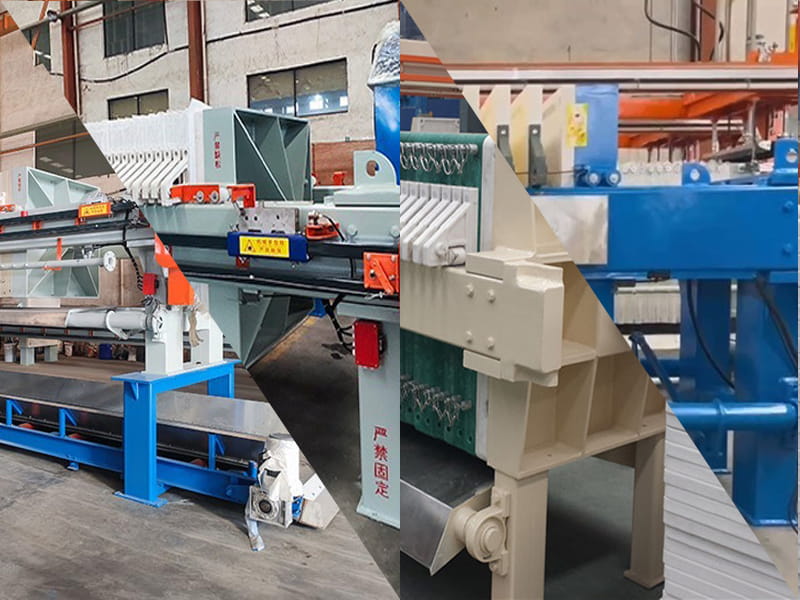
It’s called a mixed pack configuration. You alternate membrane plates with standard recessed chamber plates in the same press. So, say, every other plate is a membrane plate. This hybrid setup captures a significant portion of the cycle time and dryness benefits—at 30–40% lower capital cost than a full membrane stack.
For many plants, this is the sweet spot. You get faster cycles and drier cake without blowing your budget. It’s a value-engineering move that a lot of vendors won’t mention unless you ask.
So, ask.
7. When Membrane Becomes Essential
There are situations where a membrane press isn’t just an upgrade—it’s a requirement.
If your process involves cake washing or air blowing, you need a membrane press. The inflated diaphragm creates a tight seal against the cloth, forcing wash liquor or air uniformly through the entire cake. This is critical for impurity removal or product recovery. A chamber press simply cannot do this efficiently.
Likewise, if you’re dealing with incompressible, mineral-based slurries (like phosphogypsum or mining tailings), the membrane’s high-pressure squeeze delivers performance leaps that a chamber press can’t touch.
For basic sludge dewatering where ultimate dryness isn’t critical, a chamber press remains a cost-effective, reliable choice. But if purity, recovery, or ultra-low moisture are on the table, don’t even think about skipping the membrane.
Decision Framework: Which One Should You Choose?
Alright, let’s bring this home.
Here’s a no-frills checklist to guide your capital decision:
- You want the lowest upfront cost → Chamber filter press. It’s simple, robust, and does the job for easy-to-dewater materials.
- You need maximum cake dryness to slash disposal costs → Membrane filter press. The numbers don’t lie.
- You’re processing variable sludge with inconsistent feed solids → Membrane. The flexibility alone justifies it.
- Your plant is throughput-constrained → Membrane. Cutting cycle times in half unlocks capacity you didn’t know you had.
- Budget is tight but you still want better performance → Mixed pack. Seriously, explore this.
- Cake washing or product purity matters → Membrane. Non-negotiable.
No matter what, I strongly recommend pilot testing with your actual material. Every sludge is different. The only way to know for sure is to run a test and measure the results. It’s a small investment that can save you from a seven-figure mistake.
The Bottom Line
The membrane filter press vs chamber filter press debate isn’t about which one is “better.” It’s about which one aligns with your operational priorities and financial reality.
A chamber press is the dependable, low-cost workhorse. A membrane press is the high-efficiency athlete. Both have their place. The key is to run the TCO numbers, understand your sludge, and—most importantly—not get seduced by a lower upfront price without looking at the long haul.
In 2026, with disposal costs rising and regulations tightening, the smart money is on technologies that squeeze out every last drop of value. And often, that means squeezing the cake a little harder.
Got a specific slurry you’re trying to dewater? Drop a comment below or reach out to a filtration specialist. And if you found this guide useful, share it with someone who’s about to make the wrong choice—it might just save them a fortune.