Ever wondered how industries turn muddy slurry into dry, manageable solids?
That’s where a filter press comes in. It’s basically a heavy-duty machine that squeezes liquid out of sludge. Think of it like a giant industrial coffee filter on steroids.
What Is a Filter Press?
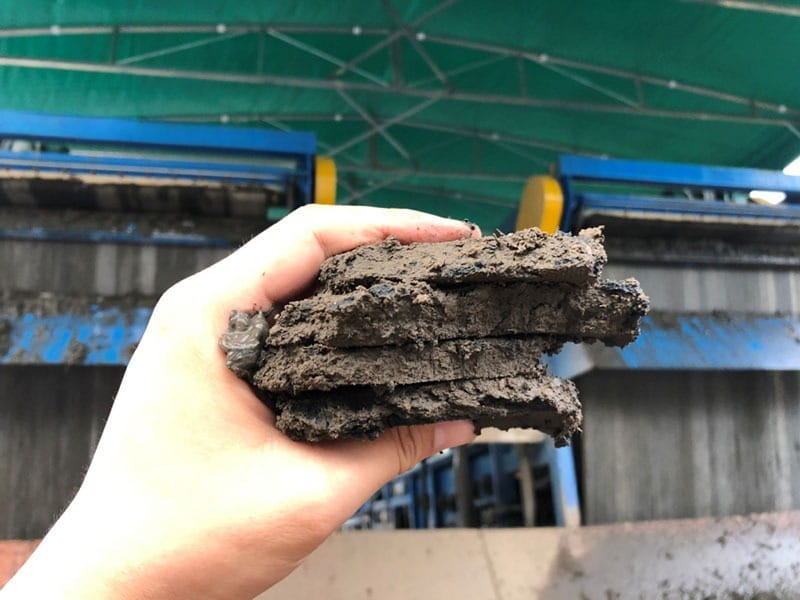
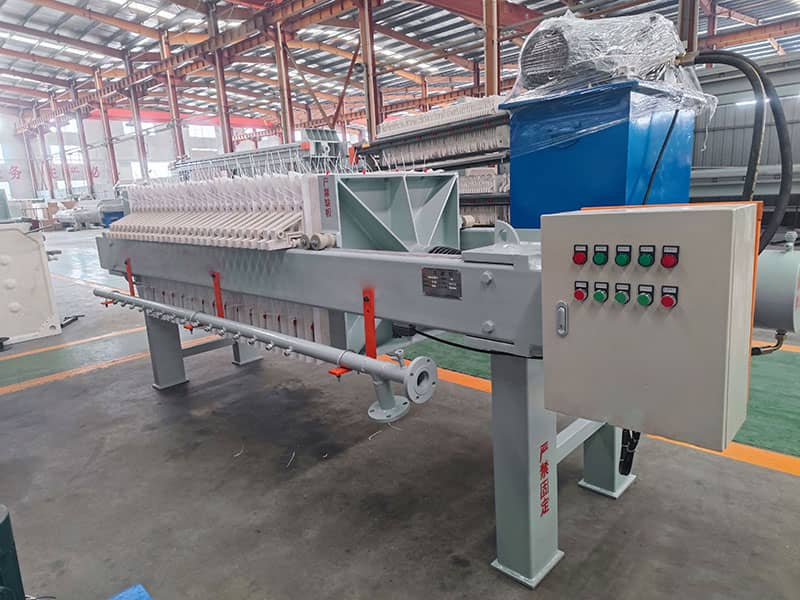
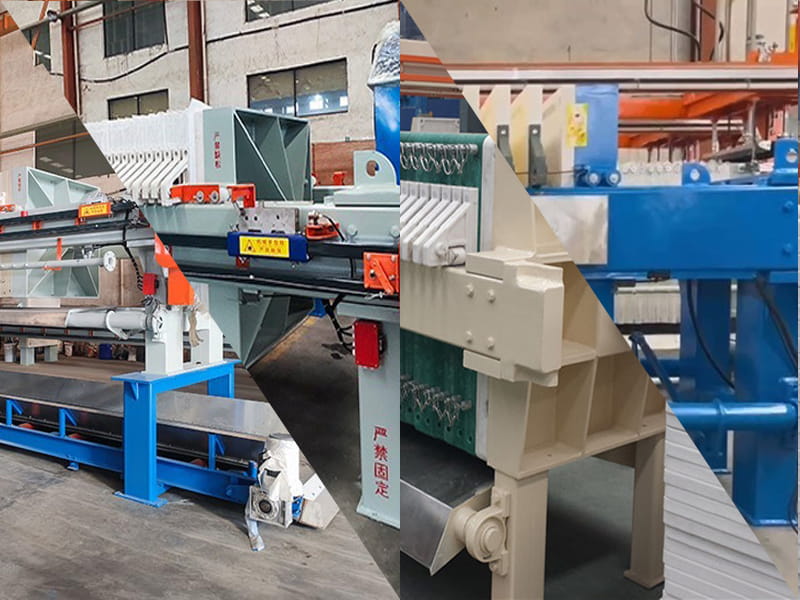
The filter press is an industrial equipment that uses pressure to separate liquids from solids, creating a dry “cake” from wet slurry. The process is surprisingly simple but incredibly effective.
As a professional filter press manufacturer, I’ve spent years analyzing industrial equipment (and helping companies optimize their operations). And filter presses consistently deliver some of the best ROI in the dewatering space.
Here’s why:
They can reduce waste volume by up to 90%. That’s HUGE for disposal costs.
How Does a Filter Press Actually Work?
Let me break down the process step-by-step:
1. Filling Stage
The slurry gets pumped into chambers between filter plates. Picture a bunch of dinner plates stacked together with space between them.
2. Filtration Stage
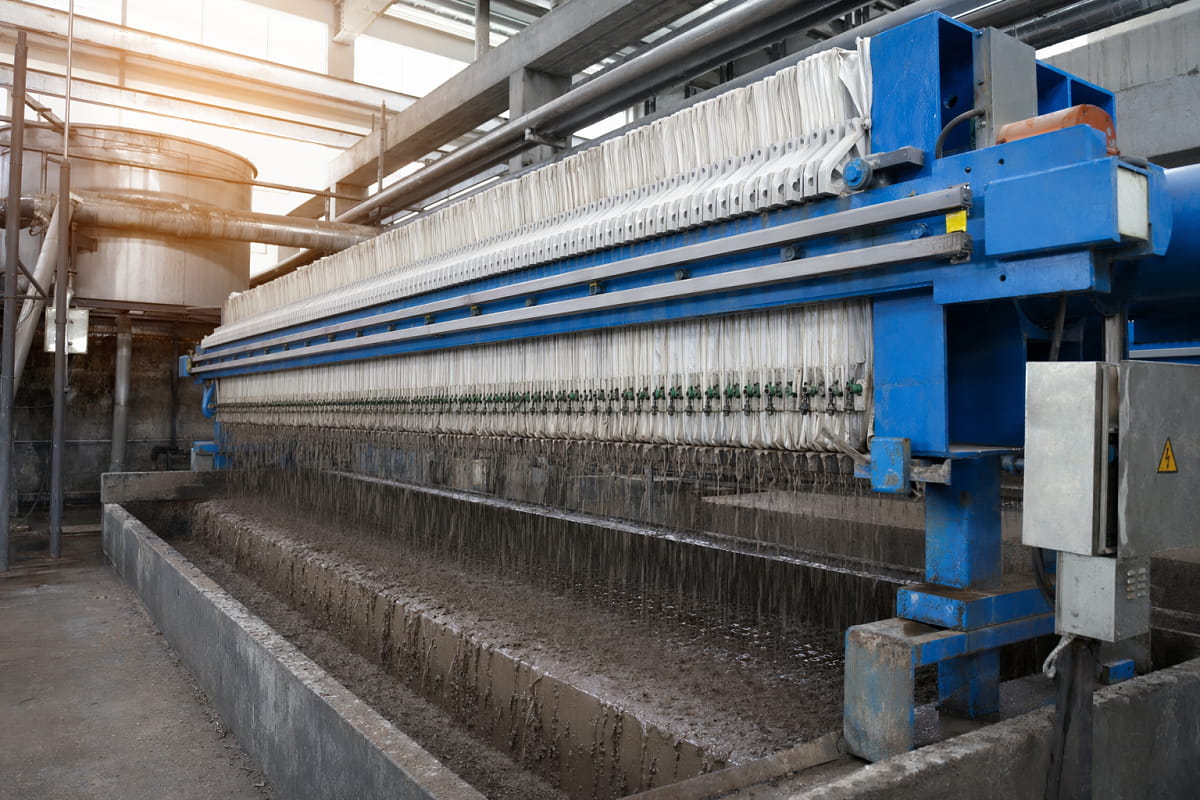
High pressure (usually 100-225 psi) squeezes the plates together. The liquid passes through special filter cloths while solids stay behind.
3. Cake Formation
As more liquid gets squeezed out, the solids compress into a dense “cake.”
4. Discharge Stage
The plates separate and the solid cakes fall out. Simple as that.
The entire cycle typically takes 20-120 minutes. But here’s the kicker: it runs mostly unattended.
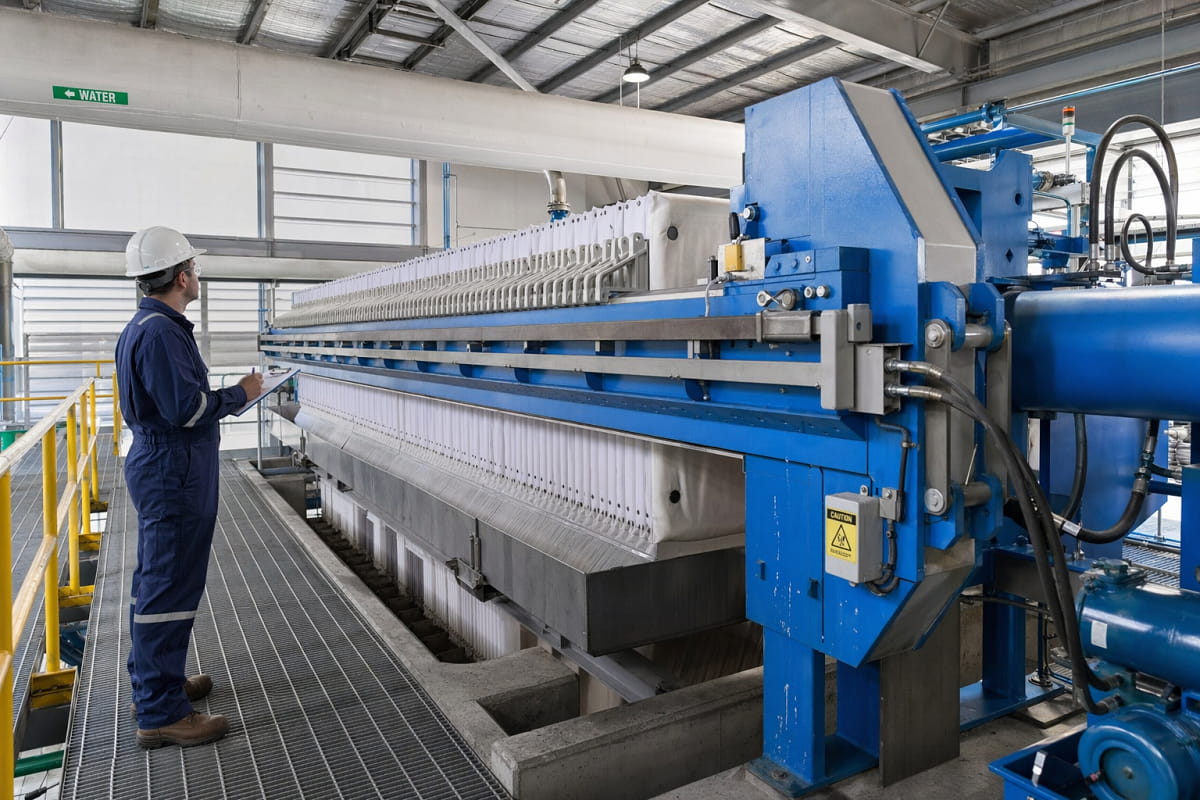
The 4 Main Components of Filter Press
1. The Frame
This is the skeleton that holds everything together. Without a sturdy frame, you’re looking at a pressure disaster.
Most frames use either:
- Overhead beam design (better for high-pressure washing)
- Side beam design (more compact, lower pressure applications)
2. Filter Plates
These create the chambers where the magic happens. Modern plates come in three main types:
Recessed chamber plates – The workhorse of the industry
Membrane plates – Extra squeeze for maximum dryness
Plate and frame style – Old school but still useful for certain applications
3. Filter Cloth
This is where the actual filtration happens. The cloth needs to:
- Let liquid through
- Trap solids effectively
- Release the cake cleanly
- Last for hundreds of cycles
Pro tip: Choosing the wrong cloth is the #1 mistake I see companies make. It can literally double your operating costs.
4. The Hydraulic System
Provides the muscle to compress everything together. No pressure = no dewatering.
Real-World Applications (Where You’ll Actually See These)
Filter presses show up everywhere. And I mean EVERYWHERE.
Here’s a breakdown by industry:
Mining Operations
Remember those massive tailings ponds that make the news? Filter presses help eliminate them.
One copper mine I worked with reduced their tailings volume by 85%. That’s millions in saved disposal costs.
Wastewater Treatment
Municipal plants use filter presses to turn sewage sludge into manageable solids.
The numbers are impressive:
- Input: 2-5% solids
- Output: 25-40% solids
That’s a 10x reduction in volume.
Food & Beverage
Ever wonder what happens to spent grains from breweries? Or pulp from juice production?
Yep. Filter presses.
Chemical Manufacturing
These industries deal with some nasty stuff. Filter presses help them:
- Recover valuable materials
- Meet discharge regulations
- Reduce hazardous waste volumes
The Money Talk: Why Companies Love Filter Presses
Let’s talk ROI (because that’s what really matters).
A typical filter press setup costs $50,000-$500,000. Sounds expensive?
Here’s what you get:
- Operating costs: 1/6 of belt presses or centrifuges
- Drier cakes: 25-45% solids vs 18-25% from belt presses
- Less maintenance: Fewer moving parts = fewer breakdowns
One client saved $2.3 million annually just on disposal costs. Their filter press paid for itself in 4 months.
Filter Press vs. Other Dewatering Methods
I get this question constantly: “Why not use a centrifuge?”
Here’s my honest comparison:
Filter Press Advantages:
- Highest cake dryness
- Lower operating costs
- Better with difficult materials
- Handles varying feed conditions
When to Choose Alternatives:
- Centrifuges: When you need continuous operation
- Belt presses: For easy-to-dewater materials
- Screw presses: Small volumes, simple operation
But for most industrial applications? Filter press wins hands down.
Common Mistakes (And How to Avoid Them)
After analyzing hundreds of installations, these mistakes keep popping up:
Mistake #1: Wrong Cloth Selection
Using the wrong filter cloth is like wearing sneakers to run a marathon in mud. It just doesn’t work.
Solution: Test different cloths with YOUR specific material. Don’t trust generic recommendations.
Mistake #2: Ignoring Pre-treatment
Throwing raw slurry at a filter press is asking for trouble.
Solution: Proper conditioning (usually with polymers) can double your throughput and cut cycle times in half.
Mistake #3: Oversizing Equipment
Bigger isn’t always better. I’ve seen companies buy massive presses that run at 30% capacity.
Solution: Size based on average flow, not peak. You can always add shifts or units later.
The Technical Stuff That Actually Matters
Let’s get into some numbers (but I’ll keep it practical):
Pressure Requirements: 100-225 psi for standard applications
Cake Thickness: 25-40mm optimal (1-1.5 inches)
Cycle Times:
- Fast materials: 20-45 minutes
- Difficult materials: 60-120 minutes
Feed Consistency:
Works best with 5-15% inlet solids. Lower than 3%? You’ll need pre-thickening.
Modern Innovations Making Life Easier
The filter press industry isn’t stuck in the 1950s anymore.
Recent innovations include:
Automatic Plate Shifters
No more manual labor. Plates separate automatically, cakes drop, cycle restarts.
PLC Controls
Full automation with remote monitoring. Check your press performance from your phone.
Membrane Technology
Extra squeeze at the end of the cycle. Increases solids by 5-10% with minimal extra time.
Fast-Opening Designs
What used to take 30 minutes now takes 5.
Choosing the Right Filter Press (Your Checklist)
Here’s exactly what to consider:
- Material characteristics – pH, temperature, particle size
- Required capacity – gallons/day of slurry
- Target dryness – What solids % do you need?
- Space constraints – Overhead beam needs height
- Automation level – Manual, semi-auto, or full auto?
- Budget – Initial cost AND operating costs
Pro tip: Always pilot test with your actual material. Lab tests lie.
Real Results from Real Companies
Let me share some wins from 2026:
Case Study 1: Metal Plating Facility
- Challenge: 50,000 gallons/day of metal hydroxide sludge
- Solution: 1200mm automatic filter press
- Results: 82% volume reduction, $1.8M annual savings
Case Study 2: Food Processing Plant
- Challenge: Tomato pomace disposal costs
- Solution: Membrane filter press with automatic discharge
- Results: Created saleable byproduct, turned cost center into profit
Case Study 3: Municipal WWTP
- Challenge: Increasing sludge disposal costs
- Solution: Upgraded from belt press to filter press
- Results: 40% drier cake, 35% lower hauling costs
The Future of Filter Press Technology
The industry is evolving fast. Here’s what’s coming:
AI-Driven Optimization
Presses that learn and adjust parameters automatically.
IoT Integration
Real-time monitoring and predictive maintenance.
Energy Recovery Systems
Using hydraulic energy from the closing cycle to power other operations.
Zero Liquid Discharge
Combining filter presses with other tech for complete water recovery.
Making Your Decision
Bottom line?
If you’re dealing with industrial slurry and want the driest possible output, a filter press is your best bet.
The technology is proven. The ROI is solid. And modern systems are surprisingly easy to operate.
But remember: Success depends on proper selection and setup. Don’t buy based on price alone.
Test with your material. Size it correctly. Choose quality components.
Do it right, and you’ll have equipment that runs reliably for 20+ years.
Your Next Steps
Ready to explore filter press options? Here’s what to do:
- Characterize your slurry – Get a full analysis
- Calculate your true costs – Include disposal, not just dewatering
- Request pilot testing – Never buy without testing
- Compare total lifecycle costs – Not just purchase price
The right filter press can transform your operation. Lower costs, better compliance, easier handling.
What is a filter press ultimately? It’s a solution to one of industry’s messiest problems – and one that pays for itself surprisingly fast.