Let me explain what filter press cake is in the simplest way possible.
What is Filter Press Cake
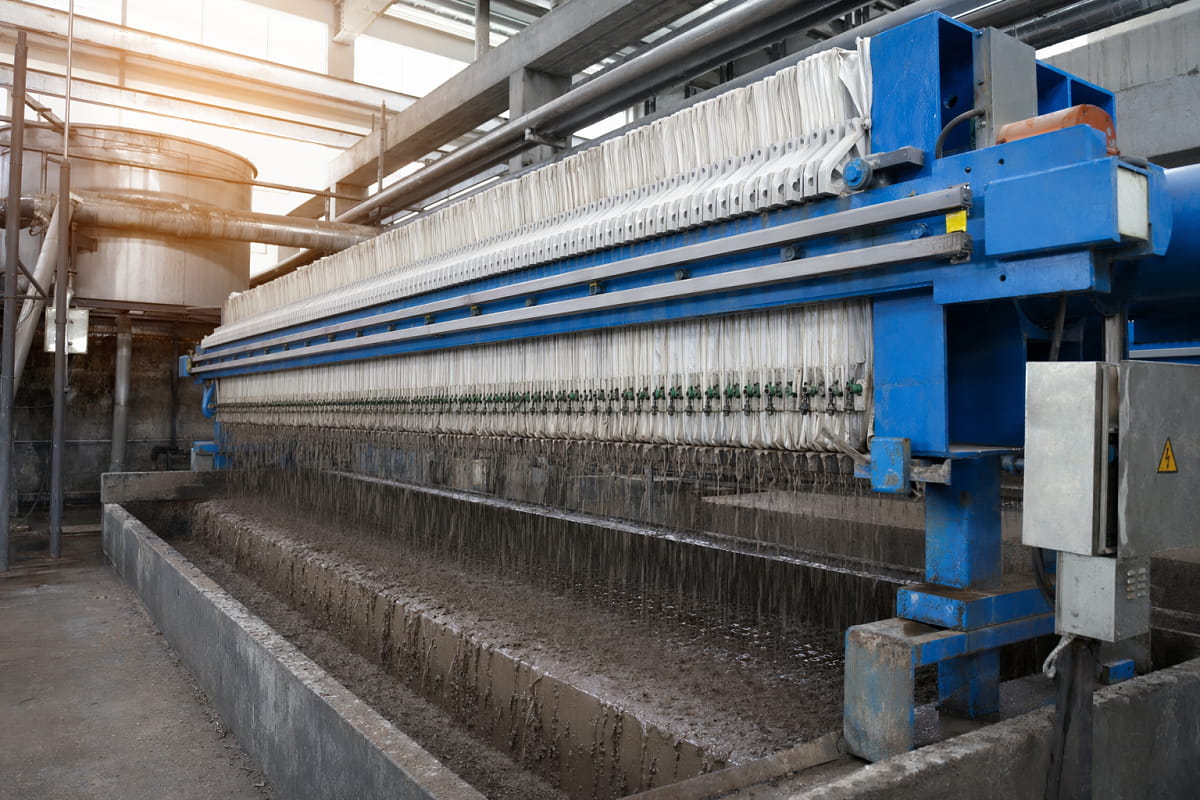
Filter press cake is the solid material that’s left behind after a slurry goes through a filter press. Think of it like coffee grounds left in your filter after brewing – except on an industrial scale. This compressed, dewatered material forms when suspended particles accumulate on filter cloths under high pressure, creating what looks like a thick, dry “cake” ready for disposal or further processing.
Here’s the deal:
When industries need to separate liquids from solids (which happens A LOT), they use filter presses. And the end result? That’s your filter press cake.
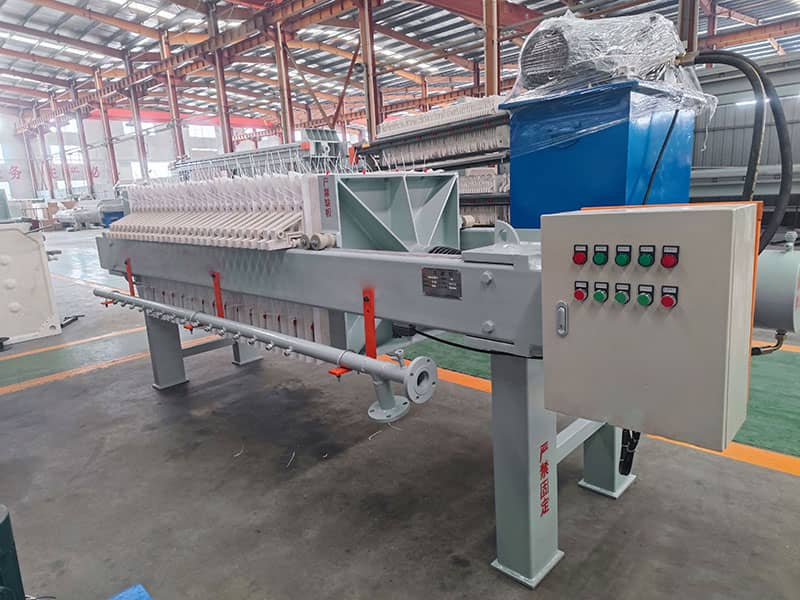
In this post, as a professional filter press manufacturer, I will share everything about filter press cake you need to know.
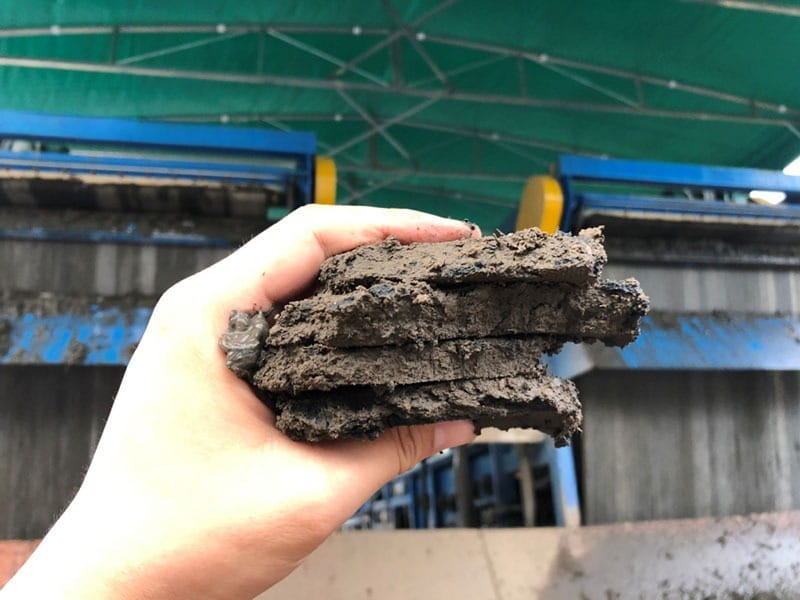
Why Filter Press Cake Matters More Than You Think
I’ll be honest – filter press cake might sound boring. But it’s actually crucial for tons of industries.
Why?
Because dealing with liquid-solid separation is expensive. REALLY expensive.
In fact, improper waste management can cost companies millions in disposal fees and environmental penalties.
That’s where understanding filter press cake comes in.
When you optimize your filter cake formation, you can:
- Reduce waste volume by up to 90%
- Cut transportation costs significantly
- Recover valuable materials that would otherwise be lost
- Meet environmental regulations without breaking a sweat
Let me share a quick example:
A mining operation I consulted with was spending $2.3 million annually on slurry disposal. After optimizing their filter press operation to produce drier cake, they cut those costs by 65%.
That’s the power of getting your filter cake right.
How Filter Press Cake Actually Forms (The Simple Version)
Here’s exactly how filter press cake forms:
Step 1: Slurry Introduction
First, you pump your slurry (that’s your liquid-solid mixture) into the filter press chambers. These chambers are created by filter plates covered with special filter cloths.
Step 2: Pressure Application
Next, hydraulic pressure forces the liquid through the filter cloths. Think of it like a super-powered strainer. The pressure typically ranges from 100 to 225 psi, depending on your material.
Step 3: Solid Accumulation
As liquid passes through, solids build up on the cloth surface. This is where the magic happens. The accumulated solids actually become a secondary filter, catching even smaller particles.
Step 4: Cake Formation
Finally, after the cycle completes (usually 20-120 minutes), you’re left with compressed filter cake. The thickness? Anywhere from 25-50mm, depending on your setup.
Pro Tip: The first few minutes of filtration are critical. That’s when your initial cake layer forms, and it determines how well the rest of the process goes.
The Science Behind Cake Resistance (And Why You Should Care)
Now, let’s talk about something most people ignore: cake resistance.
Here’s why it matters:
Cake resistance is basically how much your accumulated solids resist liquid flow. And it directly impacts:
- How thick your cake gets
- How long your cycles take
- How dry your final product is
Think of it this way:
Low resistance materials (like sand) = Fast filtration, potentially thinner cakes
High resistance materials (like clay) = Slow filtration, often thicker cakes
I’ve seen operations struggle for MONTHS because they didn’t understand their cake resistance. Once they figured it out and adjusted their parameters? Game changer.
Key Factors That Affect Your Filter Press Cake
Let’s break down what actually impacts your filter cake quality:
1. Particle Characteristics
Your particle size distribution is huge. Here’s what I’ve found:
- Fine particles (<10 microns): Create dense, high-resistance cakes
- Coarse particles (>100 microns): Form porous, low-resistance cakes
- Mixed distributions: Can lead to particle migration and uneven cakes
2. Slurry Properties
The concentration of solids in your slurry matters big time. In my experience:
- 5-10% solids: Longer cycles, potentially thinner cakes
- 15-25% solids: Optimal for most applications
- 30% solids: May require special pumping considerations
3. Operating Pressure
Higher pressure doesn’t always mean better results. Here’s the breakdown:
- Low pressure (50-100 psi): Good for fragile materials
- Medium pressure (100-150 psi): Works for most applications
- High pressure (150-225 psi): Best for achieving maximum dryness
4. Filter Cloth Selection
This is where people mess up. Your cloth choice impacts:
- Initial cake formation
- Filtration rate
- Cake release
- Overall cycle efficiency
I always recommend starting with a permeability between 15-50 CFM for most applications.
Real-World Applications (Where You’ll Actually See Filter Press Cake)
Filter press cake shows up in more places than you’d think:
Mining and Metals
- Tailings dewatering (producing 65-80% solids cake)
- Concentrate recovery
- Precious metal recovery
Chemical Manufacturing
- Pigment production (achieving <1% moisture)
- Catalyst recovery
- Waste treatment
Wastewater Treatment
- Municipal sludge dewatering (25-35% solids typical)
- Industrial waste processing
- Heavy metal removal
Food and Beverage
- Juice clarification
- Beer filtration
- Edible oil processing
Each industry has different targets. Mining might be happy with 70% solids, while pharmaceuticals might need 95%+.
Common Problems With Filter Press Cake (And How to Fix Them)
Let me share the biggest issues I see:
Problem 1: Cake Too Wet
Signs: Cake falls apart, high moisture content, disposal issues
Fix: Increase cycle time, check pressure, consider membrane squeeze
Problem 2: Uneven Cake Formation
Signs: Thick spots, thin spots, poor cake release
Fix: Check feed distribution, verify cloth condition, adjust filling rate
Problem 3: Slow Cycle Times
Signs: Cycles taking 2x longer than expected
Fix: Analyze cake resistance, optimize pressure curve, consider conditioning agents
Problem 4: Poor Cake Release
Signs: Cake sticks to cloths, manual intervention needed
Fix: Check cloth blinding, adjust cake thickness, consider release aids
The bottom line? Most cake problems trace back to not understanding your specific material.
Advanced Optimization Strategies
Want to take your filter press cake to the next level? Here’s what the pros do:
1. Implement Cake Washing
When you need ultra-pure products, washing removes trapped impurities. I’ve seen purity levels jump from 85% to 99.5% with proper washing protocols.
2. Use Membrane Squeeze Technology
Membrane plates can reduce moisture by an additional 10-20%. That might not sound like much, but when you’re processing 100 tons per day? Huge difference.
3. Optimize Your Conditioning
The right chemical conditioning can:
- Reduce cycle times by 30-50%
- Improve cake dryness by 5-15%
- Decrease cloth blinding
4. Monitor Cake Resistance Trends
Track your cake resistance over time. Sudden changes often indicate upstream process issues before they become major problems.
The Future of Filter Press Cake Technology
The industry is evolving fast. Here’s what’s coming:
Smart Monitoring Systems
Real-time cake thickness monitoring, predictive maintenance alerts, and automated optimization are becoming standard.
Advanced Materials
New filter cloth materials promise better release, longer life, and improved filtration rates.
Sustainability Focus
More operations are finding ways to reuse filter cake – from construction materials to soil amendments.
Making Filter Press Cake Work for You
Here’s my advice after years in this field:
- Know your material inside and out – Particle size, cake resistance, chemical composition all matter
- Don’t chase the driest possible cake – Find the sweet spot between dryness and cycle time
- Invest in good instrumentation – You can’t optimize what you can’t measure
- Regular maintenance is non-negotiable – Worn cloths and damaged plates kill performance
- Consider the total cost – Sometimes wetter cake with faster cycles saves money overall
The Bottom Line on Filter Press Cake
Understanding what filter press cake is – and more importantly, how to optimize it – can transform your operation.
Whether you’re dealing with mining tailings, chemical waste, or food processing residues, getting your cake right means:
- Lower disposal costs
- Better regulatory compliance
- Improved process efficiency
- Reduced environmental impact
The key is understanding that filter press cake isn’t just waste – it’s the end result of a complex separation process that, when optimized, can save serious money and headaches.
Remember: every slurry is different. What works for one application might fail miserably in another. But with the right approach and understanding of the fundamentals I’ve outlined here, you’ll be well on your way to filter press success.
So next time someone asks “What is filter press cake?”, you’ll know it’s way more than just industrial leftovers – it’s a critical component of efficient solid-liquid separation that impacts everything from operating costs to environmental compliance.