Quick Summary
Filter presses are essential separation equipment that reduce chemical waste volume by up to 90% while recovering valuable materials like catalysts worth thousands per pound. The four main types (plate and frame, chamber, membrane, and automatic) each serve different chemical applications from wastewater treatment to pharmaceutical processing.
Proper selection requires analyzing your slurry, defining goals, calculating capacity, and choosing materials compatible with your chemicals. Companies typically see ROI within 6-18 months through reduced disposal costs and material recovery.
Ever wondered how chemical plants turn sludgy waste into clean water and dry solids?
Filter press! Without them? Chemical plants would drown in their own waste. Production would grind to a halt. And environmental compliance? Forget about it.
In this guide, as a professional filter press manufacturer, I’ll show you exactly how filter presses work in chemical manufacturing, which types deliver the best results, and how to choose the right system for your operation.
Let’s dive in.
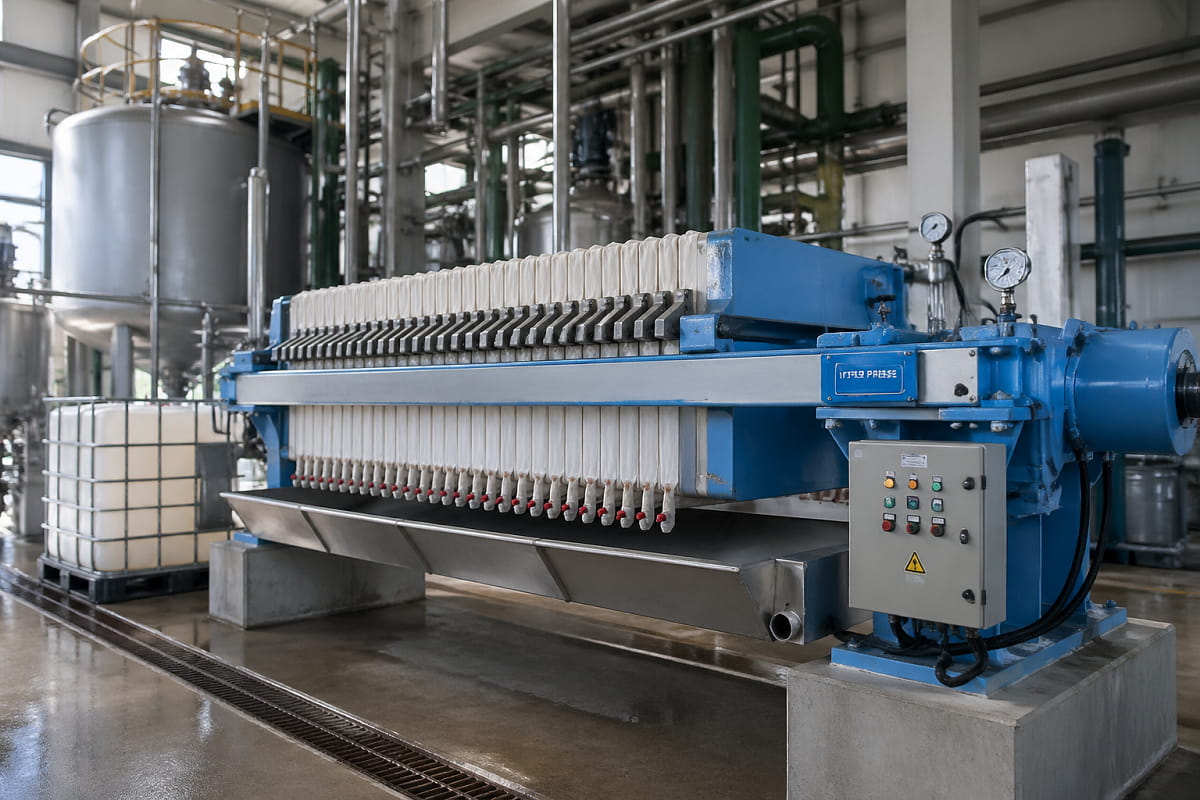
Why Chemical Plants Can’t Live Without Filter Presses
Let me paint you a picture.
A typical chemical plant produces thousands of gallons of wastewater daily. This isn’t just water – it’s loaded with:
- Suspended solids
- Reaction byproducts
- Valuable catalysts
- Process chemicals
- Heavy metals
Without proper separation? You’re looking at:
Massive disposal costs. Hauling liquid waste is expensive. Really expensive. We’re talking $200-500 per ton in many regions.
Lost materials. Those catalysts swimming in your waste stream? They could be worth thousands per pound.
Compliance nightmares. Environmental regulations get stricter every year. One violation can cost millions.
Production bottlenecks. Poor separation means longer cycle times and reduced throughput.
Here’s a real example:
A specialty chemical manufacturer in Ohio was spending $1.2 million annually on waste disposal. After installing a proper filter press system, they:
- Cut disposal costs by 78%
- Recovered $400K worth of catalyst annually
- Reduced their environmental footprint significantly
Not bad for a machine that looks like a giant sandwich press, right?
The 4 Types of Filter Presses Dominating Chemical Plants
Not all filter presses are created equal.
Different chemical processes need different solutions. Here are the heavy hitters:
1. Plate and Frame Filter Press
The OG of chemical filtration.
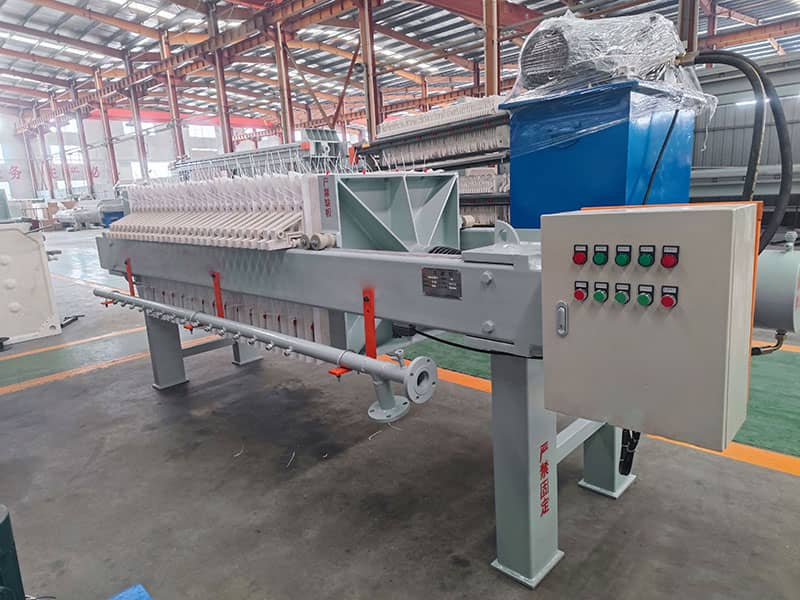
These use alternating plates and frames to create filtration chambers. Think of it like a deck of cards where every other card has a hole in it.
Best for:
- Small to medium operations
- Batch processing
- When flexibility matters
The catch? They require more manual labor. Not ideal for 24/7 operations.
2. Chamber Filter Press
The workhorse of modern chemical plants.
Chamber presses use recessed plates that form sealed chambers when pressed together. No separate frames needed.
Why they’re popular:
- Higher pressure capability (up to 225 psi)
- Less maintenance
- Faster cycle times
- Better for automation
I’ve seen these handle everything from titanium dioxide to pharmaceutical intermediates.
3. Membrane Filter Press
The overachiever.
These bad boys have inflatable membranes behind the filter cloth. After initial filtration, the membranes expand to squeeze out even more liquid.
The result?
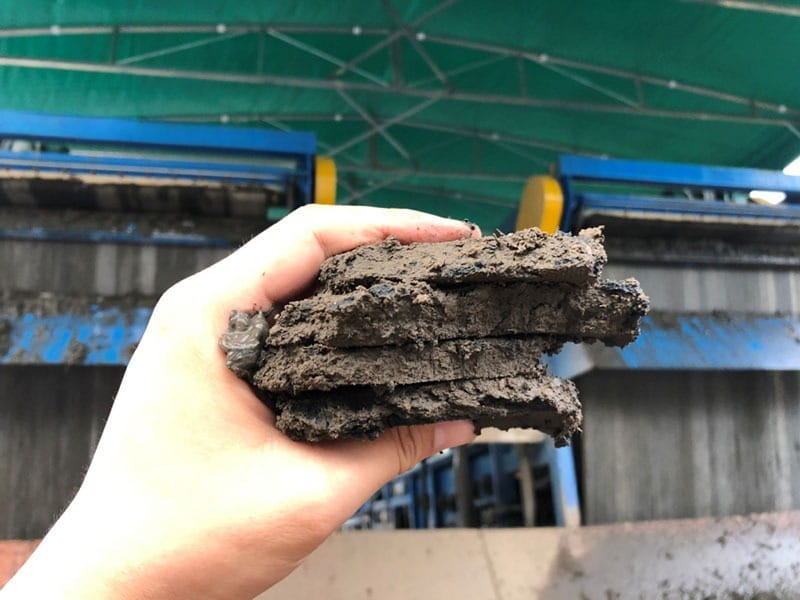
- 30-40% drier cakes
- Shorter cycle times
- Better wash efficiency
Perfect for high-value chemicals where every drop counts.
4. Automatic Filter Press
The future is here.
Fully automated systems handle everything:
- Plate shifting
- Cake discharge
- Cloth washing
- Pressure monitoring
Bottom line: Set it and forget it. These systems run 24/7 with minimal supervision.
Real-World Chemical Applications That Rely on Filter Presses
Let’s get specific.
Here’s where filter presses really shine in chemical manufacturing:
Wastewater Treatment
Every chemical plant generates wastewater. Period.
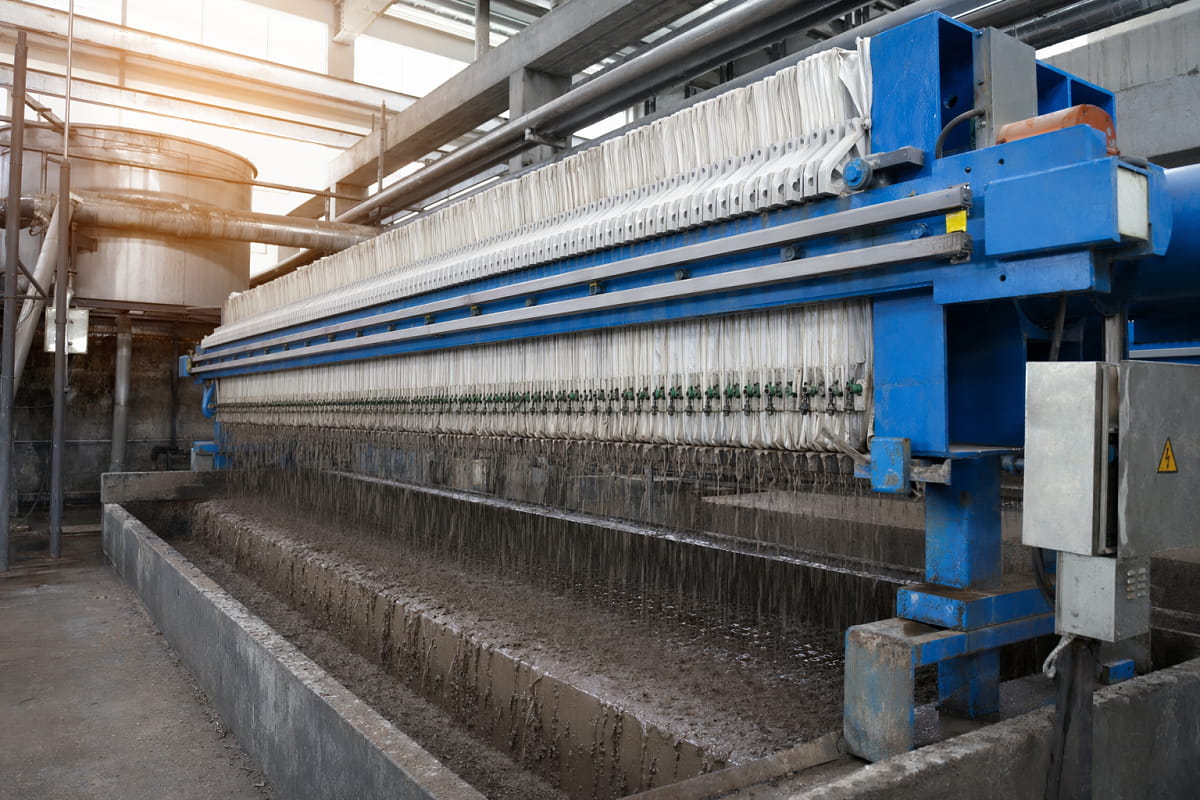
Filter presses turn that liability into manageable solid waste and reusable water. I’m talking about handling:
- Metal hydroxides
- Organic sludges
- Inorganic precipitates
The numbers: Proper filtration can reduce wastewater volume by 95% or more.
Catalyst Recovery
Catalysts are expensive. Like, really expensive.
Many cost $1,000+ per kilogram. Filter presses help recover and recycle these materials instead of sending them down the drain.
Common applications:
- Precious metal catalysts
- Zeolite recovery
- Enzyme separation
Pigment and Dye Production
Color me impressed.
Pigment manufacturing requires precise particle separation. Filter presses deliver:
- Consistent particle size
- High purity products
- Minimal product loss
Major players in the paint and coating industry wouldn’t dream of operating without them.
Pharmaceutical Intermediates
When purity matters most.
Pharmaceutical chemicals demand exceptional cleanliness. Filter presses provide:
- Validated separation processes
- GMP-compliant operation
- Complete batch traceability
Specialty Chemical Production
The Swiss Army knife application.
From surfactants to specialty polymers, filter presses handle it all. They’re especially valuable for:
- High-value products
- Small batch runs
- Difficult-to-filter materials
How to Choose the Right Filter Press for Your Chemical Process
Choosing a filter press isn’t like buying a car.
You can’t just pick the shiniest one.
Here’s my proven selection framework:
Step 1: Analyze Your Slurry
First things first: know your enemy.
Test these parameters:
- Particle size distribution (affects cloth selection)
- pH level (determines material compatibility)
- Temperature (impacts seal and gasket choice)
- Solid concentration (influences sizing)
- Chemical composition (critical for material selection)
Pro tip: Get multiple samples. Process conditions change. Design for the worst case.
Step 2: Define Your Goals
What matters most?
- Maximum dryness?
- Fastest cycle time?
- Highest recovery rate?
- Lowest operating cost?
You can’t optimize everything. Pick your battles.
Step 3: Calculate Required Capacity
Here’s my simple formula:
Daily Slurry Volume × Solid Concentration = Daily Dry Solids
Then factor in:
- Operating hours
- Cycle times
- Maintenance windows
Example: 10,000 gallons/day × 5% solids = 4,170 lbs dry solids daily
With 2-hour cycles and 20-hour operation, you need 417 lbs capacity per batch.
Step 4: Select Materials of Construction
Chemical compatibility is non-negotiable.
Common options:
- Polypropylene: Great all-arounder, handles most chemicals
- Stainless steel: When strength and heat resistance matter
- Specialized alloys: For extreme conditions
- Coated steel: Budget-friendly for specific applications
Step 5: Determine Automation Level
Ask yourself:
- How many operators can you dedicate?
- What’s your labor cost?
- How consistent is your process?
Rule of thumb: If you’re running more than 2 cycles per shift, automation usually pays for itself within 18 months.
Operating Best Practices That Actually Work
Theory is great. Practice pays the bills.
Here are battle-tested tips from the trenches:
Optimize Your Feed Consistency
Garbage in, garbage out.
Maintain consistent:
- Solid concentration (±2% maximum variation)
- Particle size
- Temperature
- pH
Use equalization tanks if needed. Consistency equals efficiency.
Monitor Filtration Pressure
Pressure tells the story.
Watch for:
- Rapid pressure rise (cloth blinding)
- Slow pressure build (low solids)
- Pressure drop during cycle (cloth damage)
Smart move: Install real-time pressure monitoring. Catch problems before they cost money.
Master the Precoat Game
Precoating isn’t always necessary. But when it is, it’s critical.
Use precoat when:
- Handling fine particles (<10 microns)
- Dealing with slimy materials
- Protecting expensive filter cloth
Common precoat materials:
- Diatomaceous earth
- Perlite
- Cellulose
Time Your Cycles Right
Longer isn’t always better.
The sweet spot balances:
- Cake thickness
- Filtration rate
- Discharge reliability
My rule: Start with manufacturer recommendations. Then optimize based on actual performance.
Maintain Like Your Business Depends on It
Because it does.
Daily tasks:
- Check hydraulic oil levels
- Inspect filter cloths
- Monitor pressure readings
Weekly tasks:
- Grease moving parts
- Test safety systems
- Clean spray nozzles
Monthly deep dives:
- Full cloth inspection
- Seal and gasket check
- Hydraulic system service
Common Pitfalls (And How to Avoid Them)
I’ve seen every mistake in the book.
Here are the expensive ones:
Undersizing Your System
The #1 rookie error.
Companies try to save money upfront. Then they’re stuck with:
- Constant overtime
- Rushed cycles
- Poor cake quality
- Equipment failure
The fix: Size for peak load plus 20%. Trust me on this.
Ignoring Cloth Selection
Filter cloth is the heart of your system.
Get it wrong and you’ll face:
- Cloth blinding
- Poor cake release
- Short cloth life
- Inconsistent results
Solution: Work with cloth experts. Test multiple options. Don’t just pick the cheapest.
Skimping on Instrumentation
Flying blind costs money.
Modern instrumentation provides:
- Cycle optimization
- Predictive maintenance
- Quality control
- Troubleshooting data
The ROI on good instrumentation? Usually under 6 months.
Forgetting About Cake Handling
Great, you made a perfect filter cake.
Now what?
Plan for:
- Conveyor systems
- Storage capacity
- Transportation logistics
- Disposal or reuse options
Neglecting Operator Training
A filter press isn’t a set-and-forget machine.
Invest in:
- Proper startup procedures
- Troubleshooting skills
- Maintenance training
- Safety protocols
Well-trained operators can double equipment life.
Making the Decision: Is a Filter Press Right for Your Chemical Operation?
Let’s cut to the chase.
You should seriously consider a filter press if:
✓ You’re spending more than $50K annually on waste disposal
✓ Your current separation method can’t meet discharge limits
✓ You’re losing valuable materials in waste streams
✓ Production bottlenecks limit growth
✓ Environmental compliance keeps you up at night
The bottom line?
Filter presses aren’t sexy. But they’re profitable.
They turn waste into manageable solids. Recover valuable materials. Meet environmental standards. And run reliably for decades.
In my experience, the question isn’t whether you need a filter press in chemical industry operations.
It’s which one will deliver the best ROI for your specific process.
Want to explore your options? Start with a slurry analysis and work from there. The right filter press in chemical industry applications can transform your operation’s efficiency and profitability.
The technology is proven. The benefits are real. And your competition is probably already using one.
What are you waiting for?