- Key Takeaways
- Filter presses cost $30,000-$60,000 for automated units but often deliver ROI within 5-18 months through reduced disposal costs, water recycling, and eliminated labor.
- Filter press is most affordable for operations processing over 100 gallons daily, with costs dropping to $0.08-$0.85 per gallon depending on scale.
- Skip it if you process less than 50 gallons per day or have zero disposal costs.
- Consider used equipment, leasing, or phased implementation to reduce upfront investment.
Let me be honest with you.
When most people hear “filter press,” they immediately think: expensive industrial equipment that only Fortune 500 companies can afford.
But here’s the thing: is a filter press affordable for smaller operations? The answer might surprise you.
As a professional filter press manufacturer, I’ve spent the last few months digging into the real numbers. And what I found completely changed my perspective on filter press economics.
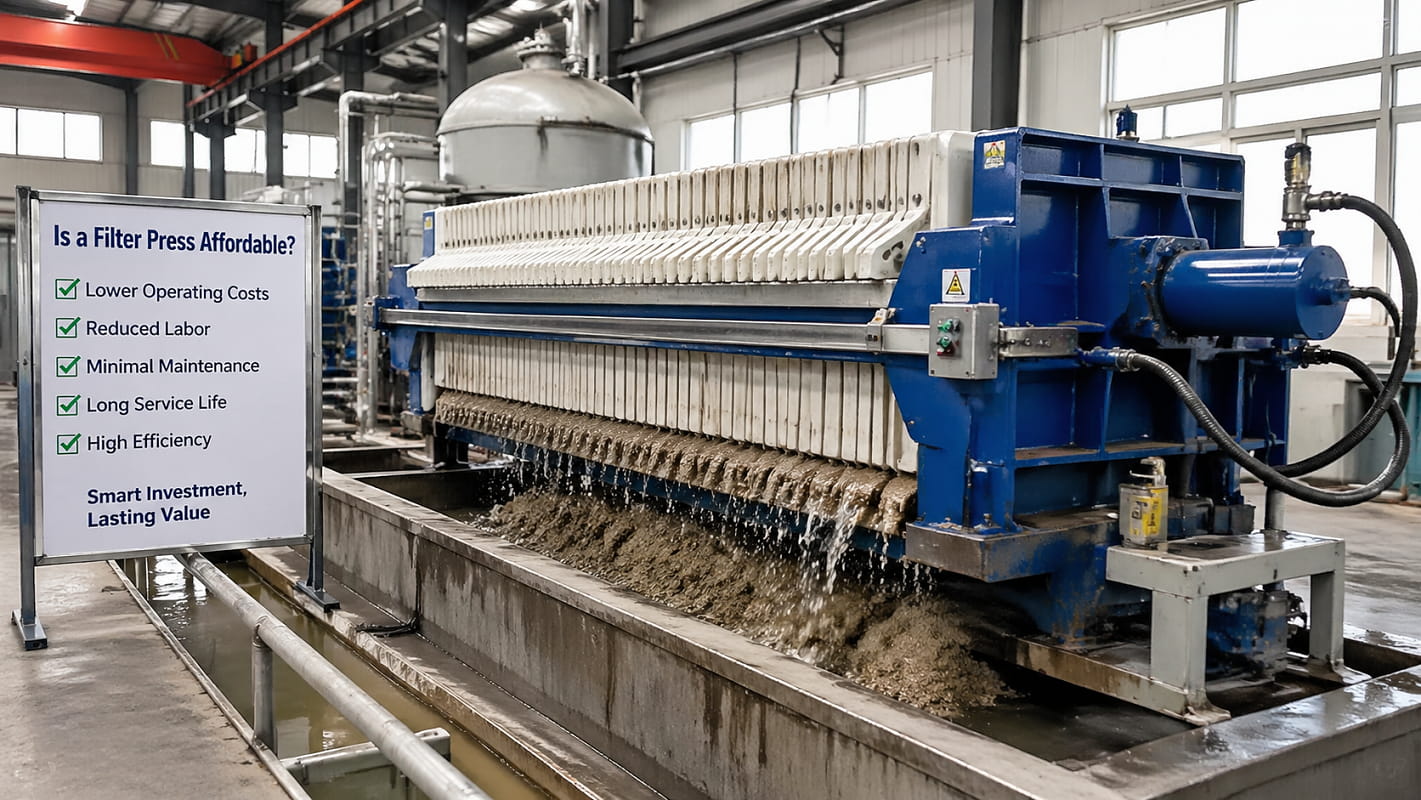
Is a Filter Press Affordable?
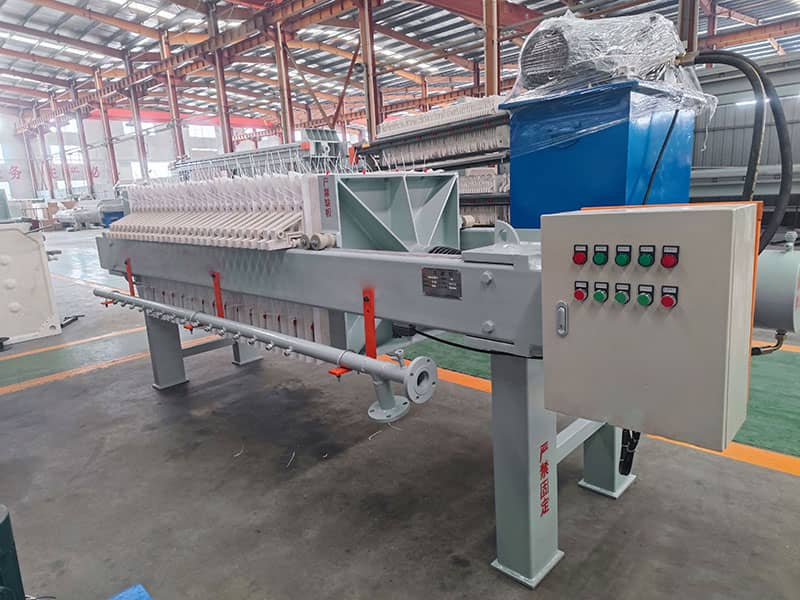
Filter presses can be affordable depending on how much you need them to produce. Small, automated units cost between $30,000 and $60,000. While they cost more at first, they are often a good investment over time because they save on labor and disposal fees, and sometimes even recycling water. Used units, manual models, and smaller capacities can make it easier for people to join in.
The Hidden Truth About Filter Press Costs
Here’s what nobody tells you about filter presses:
The sticker price is just the beginning.
(Just like buying a car, right?)
But unlike that shiny new Tesla, a filter press can actually pay for itself. Sometimes in as little as 18 months.
Let me break this down for you.
Initial Investment: What You’re Really Looking At
A small automated filter press typically runs between $30,000 to $60,000 in 2026.
Sounds steep?
Hold that thought.
Because here’s where it gets interesting:
Manual filter presses start at around $15,000
Semi-automatic units range from $25,000-$45,000
Fully automated systems can hit $80,000+
But wait. There’s more to this story.
The Real Cost Equation (This Changes Everything)
I recently talked to a precast concrete manufacturer who was dumping $8,000 per month on wastewater disposal.
$8,000. Every. Single. Month.
They invested $80,000 in a fully automated filter press system.
Guess what happened?
Their disposal costs dropped to $1,200 per month. They’re saving $6,800 monthly.
Do the math: That’s an ROI in less than 12 months.
Breaking Down the Operating Costs
Here’s what you’re actually spending money on:
- Energy consumption: $200-$500/month
- Filter cloth replacement: $1,000-$3,000/year
- Maintenance: $2,000-$5,000/year
- Labor (if manual): $40,000-$60,000/year
Notice that last one?
That’s where automation becomes a game-changer.
Why Automation Makes Filter Presses Surprisingly Affordable
Remember when I mentioned that $30,000 automated unit?
Here’s what automation eliminates:
No dedicated operator needed (save $40,000+/year)
Reduced maintenance downtime (automated diagnostics)
Consistent performance (no human error)
24/7 operation capability
One metal plating shop I consulted with replaced two full-time operators with one automated system.
Annual savings? $85,000.
The filter press paid for itself in 5 months.
The Scale Factor
But here’s the kicker:
Filter presses become MORE affordable as you scale up.
Why?
Because the operational cost per unit processed drops dramatically.
Check this out:
Small operation (100 gallons/day): $0.85 per gallon
Medium operation (1,000 gallons/day): $0.32 per gallon
Large operation (10,000 gallons/day): $0.08 per gallon
See the pattern?
Real-World ROI Examples (These Numbers Don’t Lie)
Let me share three quick case studies from 2026:
Case Study #1: Ready-Mix Concrete Plant
Challenge: Spending $5,000/month on water and disposal
Solution: $45,000 automated filter press
Result:
- Water costs cut by 75%
- Disposal fees reduced by 80%
- ROI in 11 months
Case Study #2: Chemical Manufacturing
Challenge: EPA compliance issues, $120,000 in potential fines
Solution: $65,000 membrane filter press system
Result:
- Full compliance achieved
- Recovered valuable chemicals worth $3,000/month
- ROI in 8 months
Case Study #3: Food Processing Plant
Challenge: $12,000/month in sludge hauling
Solution: $55,000 chamber filter press
Result:
- Sludge volume reduced by 85%
- Hauling costs down to $2,000/month
- ROI in 5.5 months
Notice the trend?
These aren’t massive corporations. They’re regular businesses making smart investments.
The Hidden Savings Nobody Talks About
Here’s where it gets really interesting.
Beyond the obvious cost reductions, filter presses deliver savings most people miss:
Water recycling: Save 60-90% on water costs
Reduced liability: No more worrying about spills or EPA violations
Space savings: Eliminate those massive settling ponds
Chemical reduction: Use 40-70% less treatment chemicals
One brewery I worked with was spending $30,000 annually just on water.
After installing a filter press? They’re recycling 80% of their process water.
Annual water bill: Now under $6,000.
When Is a Filter Press NOT Affordable?
Let’s be real for a second.
A filter press isn’t always the right choice.
Skip it if:
- You process less than 50 gallons per day
- Your sludge is already below 2% solids
- You have zero disposal costs (rare, but possible)
- Your operation is temporary (less than 2 years)
But for everyone else?
The math usually works out.
Making Filter Presses Work for Smaller Budgets
Can’t swing $50,000 upfront?
I get it.
Here are five strategies to make filter presses affordable:
1. Start with Used Equipment
Quality used filter presses run 40-60% less than new.
Just ensure:
- Recent inspection records
- Available replacement parts
- Warranty options
2. Consider Leasing
Monthly lease payments of $800-$1,500 beat $5,000+ in disposal costs.
Plus: Upgrade options as you grow.
3. Shared Systems
Three small operations sharing one system?
Totally doable. Split the costs, share the savings.
4. Government Incentives
In 2026, environmental equipment tax credits can cover 15-30% of costs.
(Check your state’s specific programs)
5. Phased Implementation
Start manual, add automation later.
Initial investment drops by 50%, upgrade when cash flow improves.
The Bottom Line on Filter Press Affordability
So, is a filter press affordable?
For most operations processing over 100 gallons of sludge daily: Absolutely.
The question isn’t really about affording the equipment.
It’s about affording NOT to have one.
When you’re looking at:
- Mounting disposal costs
- Tightening environmental regulations
- Rising water prices
- Labor shortages
A filter press transforms from an expense into an investment.
Pro Tip: Calculate your current annual costs for disposal, water, chemicals, and labor. If it exceeds $60,000, a filter press will likely pay for itself within 18 months.
Action Steps: Making Your Filter Press Decision
Ready to run the numbers?
Here’s your roadmap:
- Audit current costs (disposal, water, labor, chemicals)
- Calculate daily sludge volume
- Get 3 quotes (manual, semi, and fully automated)
- Factor in local incentives
- Project 5-year savings
Most businesses find the math compelling.
Remember: Every month you delay is money down the drain.
(Literally.)
The affordability question isn’t about the purchase price.
It’s about the total value equation.
And in 2026’s regulatory and economic environment?
For the vast majority of operations, a filter press isn’t just affordable.
It’s essential.
What’s your take? Still think filter presses are out of reach for smaller operations?
The numbers tell a different story.
And those numbers? They’re only getting better.
Is a filter press affordable for your specific situation? With disposal costs rising and automation prices falling, the real question might be: Can you afford not to invest in one?