Quick Summary
To remove more water after filter press operation, use membrane squeeze technology (10-20% moisture reduction), air blowdown for porous materials (5-15% reduction), or core blow to prevent re-wetting. Optimize your process by maintaining clean filter cloths, using proper chemical conditioning, and finding the sweet spot pressure (typically 150-175 psi). Combined techniques can achieve 25-35% moisture reduction beyond standard filtration, significantly cutting disposal costs.
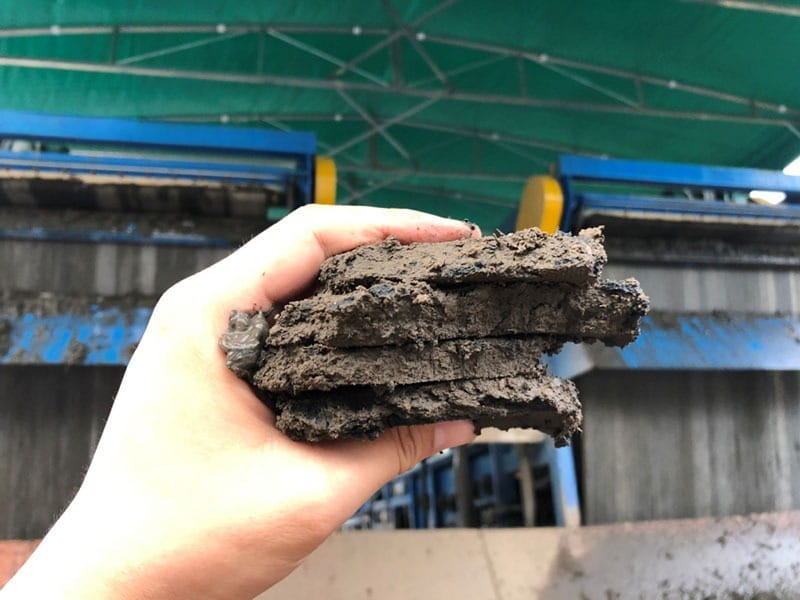
So you’ve run your filter press cycle, but the cake still feels wetter than you’d like?
I get it. Getting that extra bit of moisture out can make a huge difference in disposal costs and handling efficiency.
Most operators stop at the basic filtration cycle. But there are several proven methods to squeeze out more water and achieve drier cakes. In this guide, as a professional filter press manufacturer, I’ll show you exactly how to remove more water after filter press operation using techniques that actually work in the field.
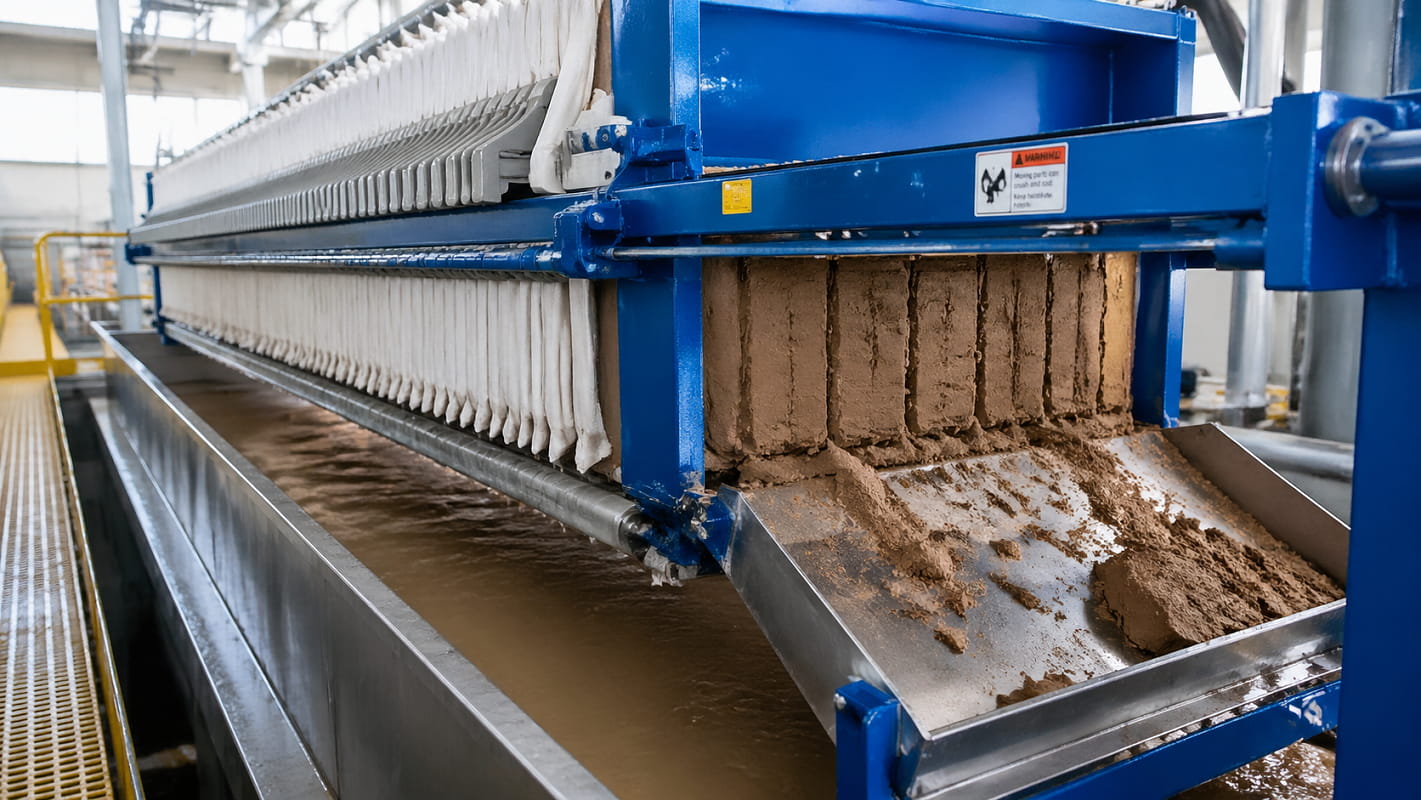
Why Removing Extra Water Matters
Let me be real with you:
Every percentage point of moisture you remove saves money. Period.
Think about it:
- Lower disposal costs (you’re hauling less water weight)
- Easier material handling (drier cakes don’t stick or slump)
- Better downstream processing (if you’re recycling the solids)
I’ve seen operations cut their disposal costs by 20-30% just by implementing these techniques.
Not bad, right?
3 Methods to Remove More Water After Filter Press Operation
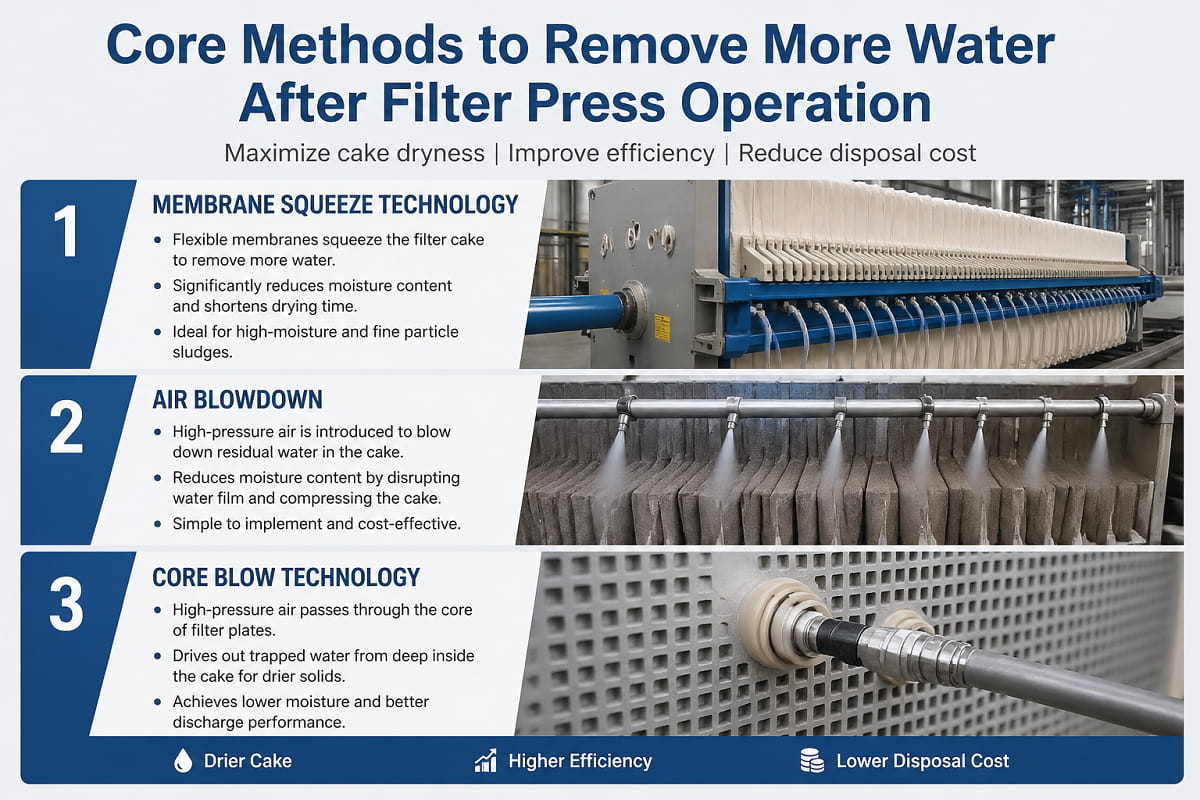
1. Membrane Squeeze Technology
This is hands-down the most effective method I’ve seen.
Here’s how it works:
Membrane filter presses use inflatable diaphragms behind the filter plates. After your normal filtration cycle, these membranes inflate (usually with water or compressed air) and physically compress the cake.
The results?
You can typically reduce moisture content by an additional 10-20%.
(That’s massive when you’re dealing with thousands of tons of material.)
The process is simple:
- Complete your normal filtration cycle
- Activate the membrane system
- Apply 100-225 psi squeeze pressure
- Hold for 5-30 minutes depending on your material
Pro Tip: Start with lower pressures and work your way up. Some materials actually give better results at moderate squeeze pressures.
2. Air Blowdown
Think of this as blow-drying your filter cake.
After filtration, you force compressed air through the cake chambers. This pushes out water that’s still trapped in the pore spaces.
Here’s what you need to know:
- Works best with porous, granular materials
- Requires 80-100 psi compressed air
- Typical cycle time: 10-30 minutes
- Can reduce moisture by 5-15%
I’ve seen this work great for:
- Sand and gravel washing operations
- Mineral concentrates
- Coal fines
(Not so great for fine clays or biological sludges – they’re too dense.)
3. Core Blow Technology
This one’s often overlooked, but it’s surprisingly effective.
Here’s the deal:
Even after your press cycle, there’s wet slurry sitting in the center feed holes. When you open the press, this material can re-wet your nice dry cake.
Core blow prevents this by:
- Injecting high-pressure air through the feed system
- Pushing wet material back to your feed tank
- Preventing cake contamination during discharge
The setup is straightforward – you just need proper valving and a compressed air connection.
Optimization Techniques That Actually Work
Chemical Conditioning
Before we talk about mechanical methods, let’s address the elephant in the room:
Your chemistry might be holding you back.
I can’t tell you how many times I’ve seen operators struggle with wet cakes when the real issue was their polymer program.
Key things to check:
- Polymer dosage (both over and under-dosing cause problems)
- Mixing energy (those polymer fisheyes are killer)
- Coagulant optimization (especially for oily wastes)
A properly conditioned slurry will always dewater better than a poorly conditioned one. No exceptions.
Pressure Optimization
Most presses can handle 100-225 psi feed pressure.
But here’s what many people miss:
Higher pressure doesn’t always mean drier cakes.
I’ve tested this extensively. Some materials actually compact and blind off at high pressures, trapping moisture inside.
My approach:
- Start at 100 psi
- Incrementally increase by 25 psi
- Measure cake moisture at each level
- Find your sweet spot
(Usually it’s between 150-175 psi, but every application is different.)
Filter Cloth Maintenance
This might sound basic, but hear me out:
Dirty cloths = wet cakes.
When your filter cloths get blinded with fine particles or polymer residue, water can’t escape properly.
Signs you need to clean your cloths:
- Longer cycle times
- Higher final moisture content
- Reduced filtrate flow
- Visible buildup on cloth surface
Cleaning options:
- High-pressure water wash (1000-1200 psi)
- Acid washing for mineral scales
- Caustic washing for organic buildup
Pro tip: Set up a regular cleaning schedule. Don’t wait until performance drops.
Troubleshooting Wet Cakes
Let’s get specific about common problems:
Problem: Sticky, Soupy Cakes
Likely cause: Polymer overdose or poor mixing
Solution:
- Reduce polymer dose by 10-20%
- Check your makedown system for fisheyes
- Consider switching polymer types
Problem: Cakes Fall Apart When Discharged
Likely cause: Insufficient dewatering time or pressure
Solution:
- Extend your feed time by 20-30%
- Increase feed pressure gradually
- Check for torn filter cloths
Problem: Variable Moisture Across the Cake
Likely cause: Uneven slurry distribution
Solution:
- Check your feed system for blockages
- Ensure proper slurry consistency
- Verify all chambers are filling evenly
Advanced Techniques for Maximum Dryness
Want to push the envelope? Here are some cutting-edge approaches:
Combined Air/Membrane Systems
Some modern presses combine membrane squeezing with air drying.
The sequence:
- Standard filtration
- Membrane squeeze
- Release membrane pressure
- Air blowdown through the loosened cake
This can achieve moisture reductions of 25-35% beyond standard filtration.
Heat-Assisted Dewatering
By heating your feed slurry to 140-180°F, you can:
- Reduce water viscosity
- Improve filtration rates
- Achieve lower final moisture
(Just watch your energy costs – this isn’t always economical.)
Cake Washing
Sounds counterintuitive, right?
But washing your cake with clean water can actually result in a drier final product by:
- Removing dissolved salts that hold moisture
- Displacing dirty water with clean water that drains better
- Improving air blow effectiveness
Setting Up Your System for Success
Here’s my recommended approach for implementing these techniques:
Step 1: Baseline Your Current Performance
- Measure current cake moisture
- Document cycle times
- Calculate disposal costs
Step 2: Start with Low-Cost Improvements
- Optimize your chemistry
- Clean your filter cloths
- Adjust feed pressure
Step 3: Test Advanced Methods
- Try air blowdown first (lower capital cost)
- Consider membrane conversion if results justify it
- Implement core blow for final optimization
Step 4: Monitor and Adjust
- Track moisture content daily
- Calculate ROI on improvements
- Fine-tune based on results
Real-World Results
Let me share some actual numbers from operations I’ve worked with:
Municipal wastewater plant:
- Started at 72% solids
- Added membrane squeeze: 78% solids
- Result: 30% reduction in hauling costs
Mining operation:
- Started at 65% solids
- Implemented air blow and core blow: 74% solids
- Result: Transformed material from “unpumpable” to “stackable”
Food processing facility:
- Started at 18% solids (biological sludge)
- Optimized chemistry and added membrane: 28% solids
- Result: Met landfill requirements without additional processing
Common Mistakes to Avoid
I’ve seen these errors countless times:
- Rushing the process – Give each phase adequate time
- Ignoring chemistry – No mechanical method can fix bad conditioning
- Neglecting maintenance – Dirty cloths and worn gaskets kill performance
- One-size-fits-all approach – Every material needs optimization
The Bottom Line
Getting more water out after your filter press cycle isn’t just possible – it’s profitable.
Whether you use membrane technology, air systems, or just optimize what you have, every percentage point of moisture reduction goes straight to your bottom line.
Start with the basics:
- Clean cloths
- Good chemistry
- Proper pressure
Then explore advanced options based on your specific needs and budget.
Remember: The driest cake doesn’t always come from the fanciest equipment. It comes from understanding your material and optimizing your entire process.
Want to take your dewatering to the next level? Start implementing these techniques and measure your results. You might be surprised at how much water you’re leaving on the table.
The key to effective dewatering is finding the right combination of mechanical, chemical, and operational improvements for your specific application. And now you know exactly how to remove more water after filter press operation.