Let me guess:
Your filter press cloth is clogged. Filtration cycles are taking forever. And your cakes are coming out wetter than a sponge in a swimming pool.
Sound familiar?
Here’s the deal: dirty filter cloths are killing your filtration efficiency. And they’re costing you money every single day.
The good news? Cleaning filter press cloth isn’t rocket science. In fact, with the right approach, you can restore your cloths to near-new condition in just a few hours.
I’m talking about cloths that filter faster, produce drier cakes, and last 2-3x longer than neglected ones.
In this guide, as a professional filter press manufacturer, I’ll show you exactly how to clean filter press cloth using methods that actually work. No fluff. Just proven techniques that’ll get your filtration system running like a dream again.
Let’s dive in.
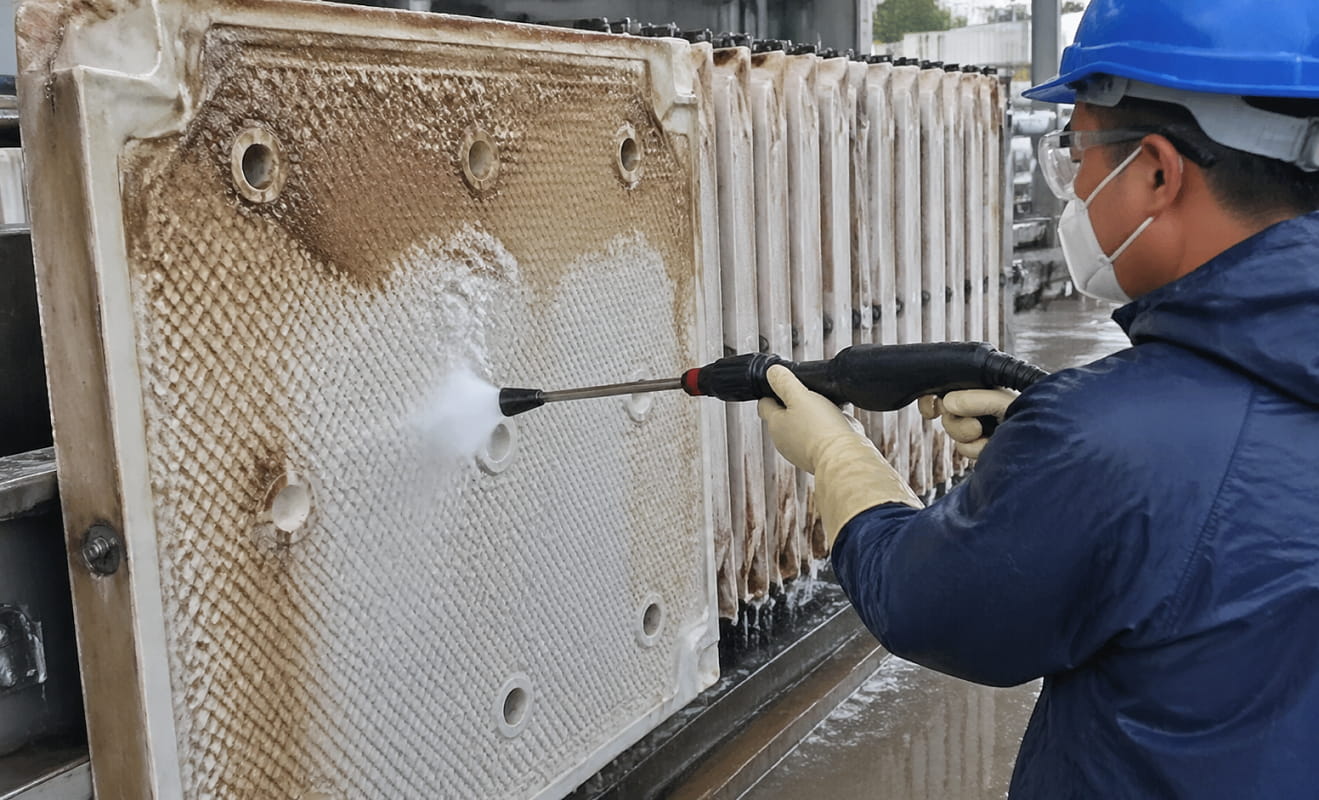
Why Filter Cloth Cleaning Matters (More Than You Think)
Here’s something most people don’t realize:
Filter cloths are like the engine of your filter press. When they’re clean, everything runs smoothly. When they’re clogged? Your entire operation grinds to a halt.
Think about it:
During filtration, tiny particles penetrate deep into the cloth weave. Over time, these particles build up like cholesterol in your arteries. The result? Slower filtration, higher pressure requirements, and wet cakes that make you want to pull your hair out.
But here’s where it gets interesting:
Regular cleaning can extend cloth life by 200-300%.
I’ve seen operations go from replacing cloths every 3 months to replacing them once a year. Just by implementing a solid cleaning routine.
The bottom line? Cleaning your filter press cloth isn’t just maintenance. It’s a profit-boosting strategy that pays for itself in weeks, not years.
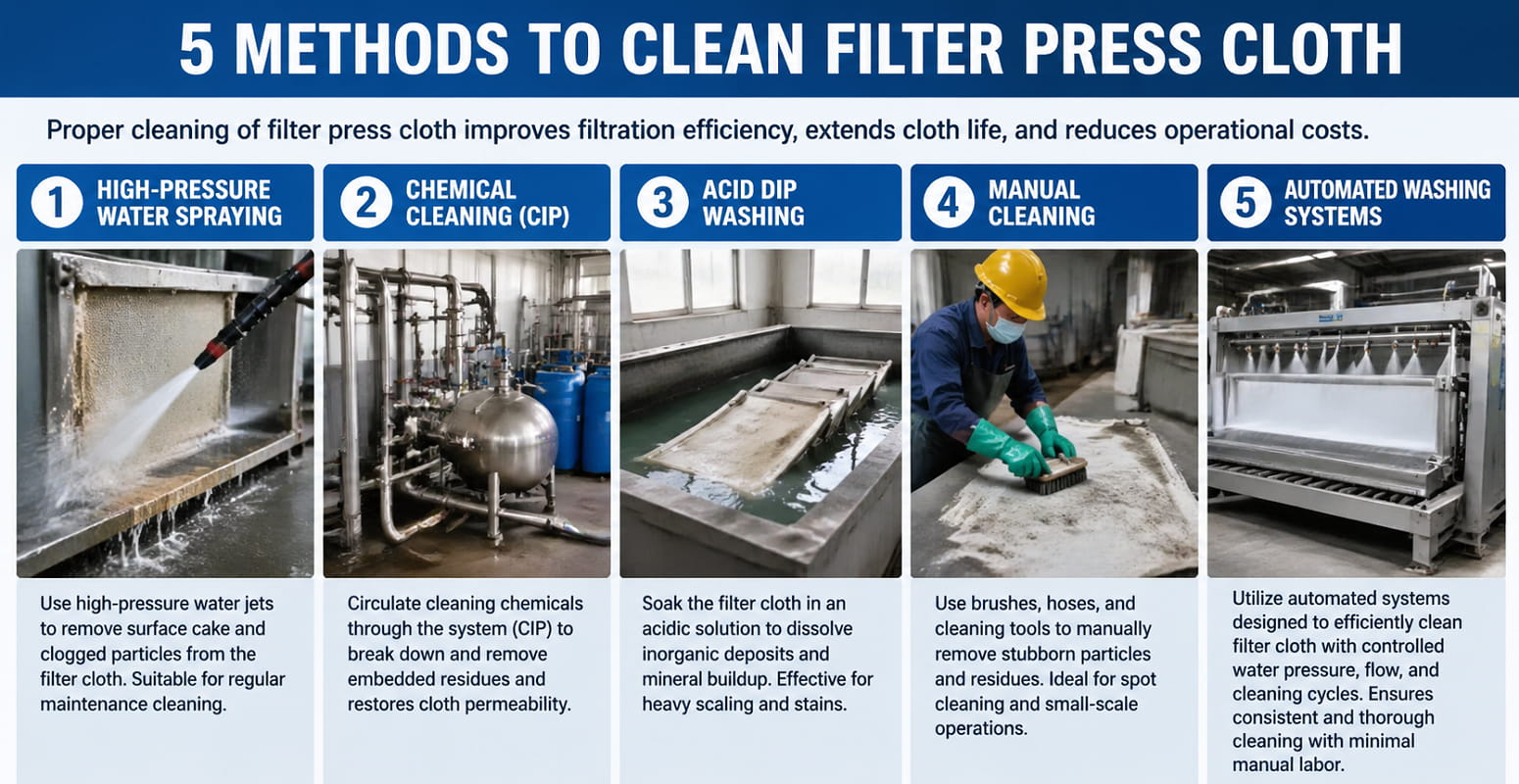
5 Battle-Tested Methods to Clean Filter Press Cloth
Now for the good stuff.
I’m going to walk you through the most effective cleaning methods in the industry. These aren’t theoretical approaches. These are techniques that work in real-world applications every single day.
Method #1: High-Pressure Water Spraying (The Quick Fix)
This is your go-to method for routine cleaning.
Here’s exactly how to do it:
- Get the right equipment: You’ll need a portable high-pressure sprayer (800-1200 PSI at 2-10 GPM)
- Use a fan-type nozzle: This prevents cloth damage while maximizing cleaning power
- Keep your distance: Hold the wand 12-18 inches from the cloth surface
- Work systematically: Start at the top and work your way down in overlapping passes
Pro Tip: Cold water works better than hot water for most applications. Hot water can actually set certain contaminants deeper into the cloth.
The beauty of pressure washing? You can do it without removing the cloths from the press. That means less downtime and more production.
Method #2: Chemical Cleaning (CIP) – The Deep Clean
Sometimes pressure washing isn’t enough. That’s when you bring out the big guns: chemical cleaning.
This method, also known as Clean-In-Place (CIP), dissolves stubborn buildup that’s lodged deep in the cloth weave.
Here’s your step-by-step process:
Step 1: Set up your system
- Install an acid storage tank (1.5x your press holding capacity)
- Use acid-resistant pumps (20-30 PSI max)
- Set up recirculation piping with proper valves
Step 2: Prepare your cleaning solution
- Mix a 3-5% hydrochloric acid solution for inorganic scaling
- Add a non-ionic detergent for organic contaminants
- For caustic-soluble materials, use alkaline solutions instead
Step 3: Execute the cleaning cycle
- Remove all cake material from cloths
- Close the filter press
- Disconnect the feed line from your sludge pump
- Connect your acid pump to the center feed
- Start circulation and run for 1-2 hours
- Flush with clean water until pH neutral
(Warning: Only use this method on gasketed filter presses. Non-gasketed units will leak like crazy.)
Method #3: Acid Dip Washing (The Overnight Solution)
Don’t have a CIP system? No problem.
Acid dip washing gets the job done with minimal equipment.
Simply:
- Remove plates from the press
- Submerge in a tank with 3-5% acid solution
- Let them soak overnight (8-12 hours minimum)
- Rinse thoroughly with clean water
The catch? Polypropylene plates float. You’ll need to weigh them down or manually keep them submerged.
But if you’ve got the time, this method works wonders for heavily blinded cloths.
Method #4: Manual Cleaning (For Small Operations)
Running a smaller operation? Manual cleaning might be your best bet.
Here’s how to do it right:
- Use plastic scrapers (never metal – they’ll tear the fabric)
- Work in sections, removing buildup systematically
- Follow up with low-pressure water rinse
- Inspect for damage as you go
Is it labor-intensive? Sure. But for operations with just a few plates, it’s often the most cost-effective approach.
Method #5: Automated Cloth Washing Systems
If you’re processing high volumes or dealing with difficult materials, automated washing might be your answer.
These systems use:
- Low-pressure, high-volume sprays
- Programmable cleaning cycles
- Automatic chemical dosing
- No operator intervention required
The investment is higher, but the labor savings and consistent results often justify the cost within 6-12 months.
Your Weekly Maintenance Checklist
Want to slash your cleaning frequency by 50% or more?
Follow this weekly routine:
Every Week:
- Rinse cloths with process water after the last cycle
- Check for tears or holes (repair immediately with duct tape)
- Clean perimeter sealing areas and stay bosses
- Inspect filtrate clarity for signs of cloth damage
Every Month:
- Perform pressure wash cleaning
- Document cloth condition with photos
- Check cleaning system components
- Review filtration cycle times for trends
Every Quarter:
- Execute full chemical cleaning
- Rotate cloths between high and low-demand positions
- Update maintenance logs
- Order replacement cloths as needed
Advanced Tips for Maximum Cloth Life
Now let’s talk about the stuff that separates the pros from the amateurs.
Tip #1: Match Your Cleaning Chemistry to Your Application
Not all contaminants are created equal.
- Mineral deposits/scale: Use hydrochloric acid (3-5%)
- Organic/oil-based residue: Try alkaline cleaners or caustic solutions
- Protein fouling: Enzyme treatments work best
- Mixed contaminants: Alternate between acid and alkaline washes
Tip #2: Prevent Damage During Cleaning
The fastest way to ruin a filter cloth? Aggressive cleaning.
Always:
- Use fan-type nozzles (never pinpoint streams)
- Maintain consistent spray distance
- Avoid concentrating on one spot
- Never use wire brushes or metal scrapers
Tip #3: Store Cloths Properly
When not in use:
- Keep cloths hydrated to prevent brittleness
- Store in a cool, dry place away from sunlight
- Avoid folding or creasing
- Use original packaging for spares
Tip #4: Know When to Replace (Not Just Clean)
Sometimes cleaning isn’t enough. Replace cloths when you see:
- Multiple patches or repairs
- Thinning fabric
- Persistent flow rate issues despite cleaning
- Tears larger than 2-3 inches
Common Mistakes That Destroy Filter Cloths
I’ve seen these mistakes cost operations thousands:
Mistake #1: Waiting too long between cleanings
Once cloths are severely blinded, recovery is nearly impossible.
Mistake #2: Using the wrong cleaning chemicals
Polyester cloths + high pH = destroyed fabric. Know your cloth material.
Mistake #3: Ignoring small tears
A 1-inch tear today becomes a 12-inch tear tomorrow. Fix damage immediately.
Mistake #4: Skipping the rinse cycle
Residual acid or caustic will eat through your cloths faster than you can say “unplanned downtime.”
The Bottom Line on Filter Press Cloth Cleaning
Here’s what it all comes down to:
Clean filter press cloths = efficient filtration, dry cakes, and massive cost savings.
The methods I’ve shared aren’t just theory. They’re proven techniques used by successful operations worldwide.
Start with regular pressure washing. Add chemical cleaning when needed. Stay on top of inspections. And don’t ignore the warning signs.
Do this, and you’ll squeeze every last drop of performance from your filter cloths.
Your filtration rates will improve. Your maintenance costs will plummet. And you’ll wonder why you didn’t start sooner.
Remember: learning how to clean filter press cloth properly isn’t just about maintenance – it’s about maximizing your operation’s profitability.
Now stop reading and start cleaning. Your filter press (and your bottom line) will thank you.