
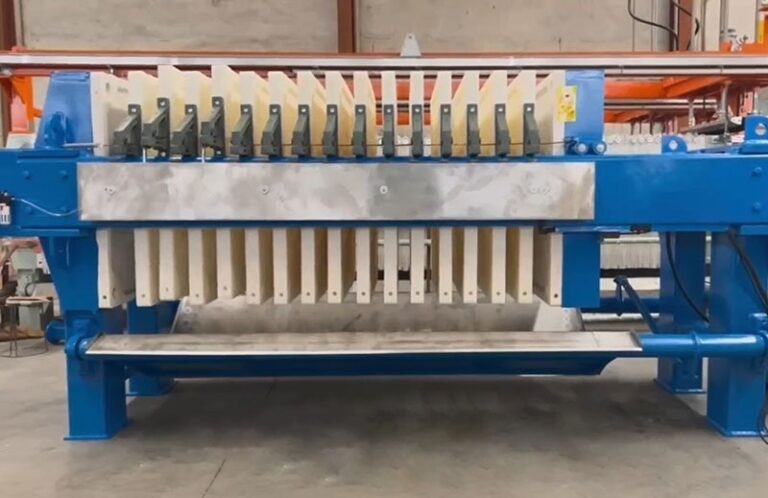
Automatic Vibrating Filter Press
For many industries, the filtration cycle isn’t the problem—unloading is. Sticky sludges like biological waste, oily clay, or chemical precipitates often cling stubbornly to the filter cloth after the press opens.
The Automatic Vibrating Filter Press eliminates the need for workers to manually scrape filter plates. Equipped with a powerful eccentric vibration system, it shakes the filter cloth bars automatically, forcing even the stickiest cakes to fall off cleanly.
Why Do You Need Vibration?
If you are filtering materials like Municipal Sludge, Palm Oil Sludge, Kaolin Clay, or Starch Waste, you know the struggle:
- 1. Manual Labor: Workers must stand by the machine and use shovels to scrape cakes one by one.
- 2. Cloth Damage: Frequent scraping tears expensive filter cloths, leading to leakage.
- 3. Downtime: Manual unloading can take 30-60 minutes, killing your daily productivity.
Our Solution: The Vibrating Filter Press automates this entire process.
The Vibration Mechanism
1. Filtration Phase: The press operates like a standard automatic filter press (feeding, filtering, squeezing).
2. Opening Phase: The hydraulic cylinder opens the plate pack.
3. Vibration Phase:
- The filter cloth is hung on a specialized suspension bar (not fixed directly to the plate).
- A Vibration Motor activates, shaking the suspension bars with high-frequency energy.
- This vibration breaks the surface tension between the cake and the cloth.
4. Discharge: The cakes fall off instantly by gravity. No human intervention required.
Benefits of Automatic Vibration
100% Cake Discharge
Ensures every chamber is empty before the next cycle begins.
Zero Manual Labor
One operator can manage multiple machines from a control room.
Longer Cloth Life
Eliminates the physical damage caused by scrapers and paddles.
Continuous Operation
Ideal for 24/7 automated plants where downtime is not an option.
Ideal Applications: Perfect for Sticky Materials
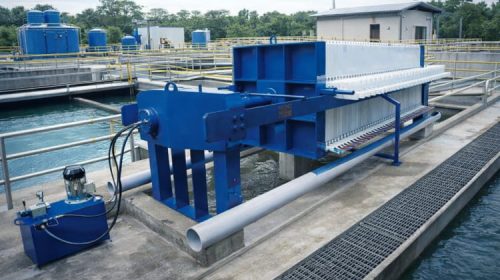
Wastewater Treatment
Biological sludge (high organic content).
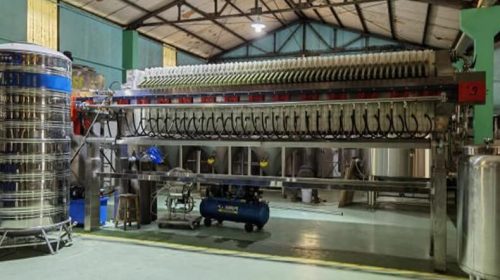
Food Industry
Yeast, starch, sugar residue, palm oil mill effluent (POME).
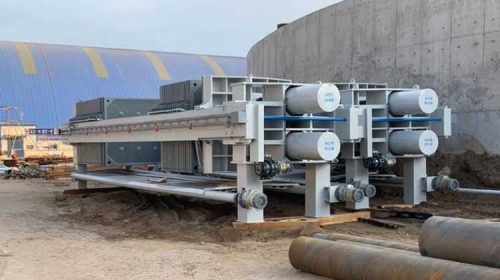
Chemicals
Viscous chemical precipitates, dyes, pigments.

Ceramics
Fine kaolin clay (often sticks due to high moisture).
Frequently Asked Questions
Q: Is the vibration loud?
A: It does produce noise during the discharge phase (typically <85dB), but it only runs for a few minutes per cycle. We can provide soundproofing enclosures if required.
Q: Does vibration damage the filter plates?
A: No. Our design uses a floating cloth bar system. The vibration energy is directed specifically at the cloth support bars, not the main plate pack or the machine frame.
Q: Can I add vibration to my existing press?
A: It is difficult to retrofit because the plate handles and overhead beam design are different. We recommend purchasing a purpose-built Vibrating Filter Press for reliable performance.
Stop Scraping, Start Vibrating
Save labor costs and extend your filter cloth life with our automated solution. Tell us your material type, and we will confirm if vibration is right for you.