
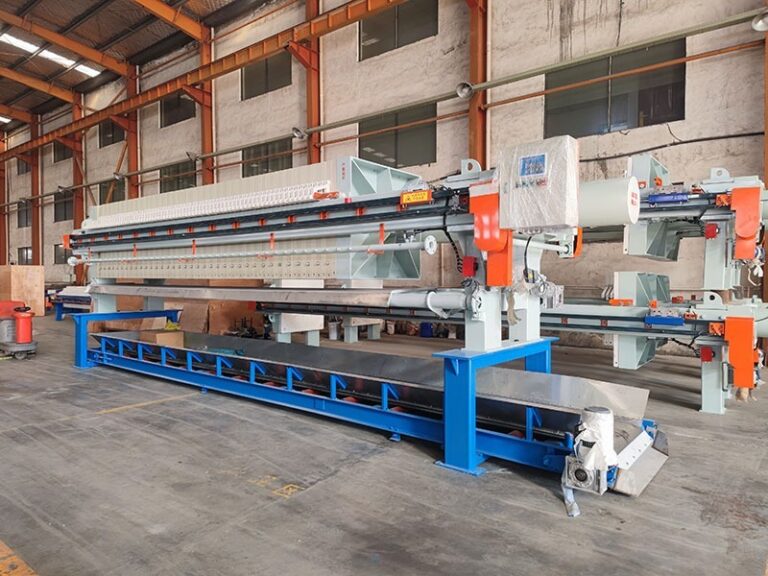
High-Efficiency Membrane Filter Press
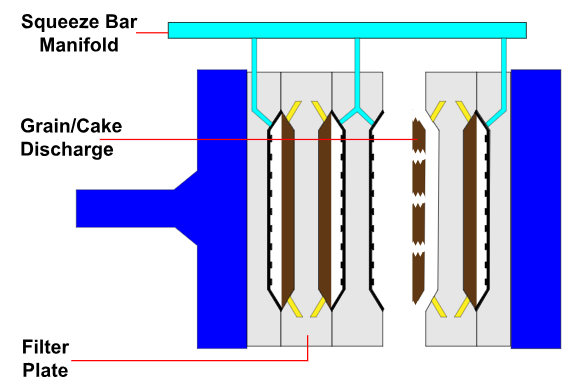
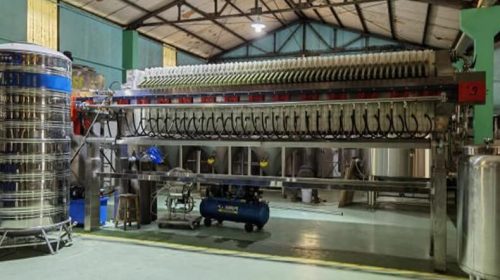
The Membrane Filter Press represents the pinnacle of industrial solid-liquid separation technology. Unlike conventional chamber presses that rely solely on feed pump pressure, our membrane filter press introduces a revolutionary “Secondary Squeezing” step.
By inflating the membrane plates with water or compressed air (up to 25 bar) after the filtration phase, it physically compresses the filter cake to its limit. The result? Drier solids, higher yield, and significantly lower disposal costs.
Reliable Membrane Filter Press Manufacturer
We are a professional membrane filter pressmanufacturer, we engineer high-performance membrane filter presses that reduce disposal costs and maximize filtrate purity.
The Membrane Squeezing Process Explained
1. Feeding Phase: Slurry is pumped into the chambers. Solids are trapped by the filter cloth, forming a cake, while filtrate exits through the drainage ports.
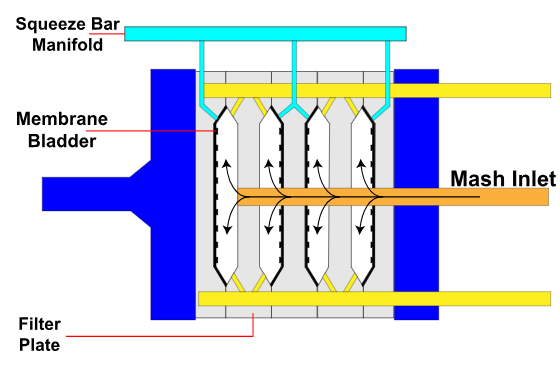
2. Initial Filtration: Once the chambers are full, the feed pump stops. At this stage, it behaves like a standard chamber press.
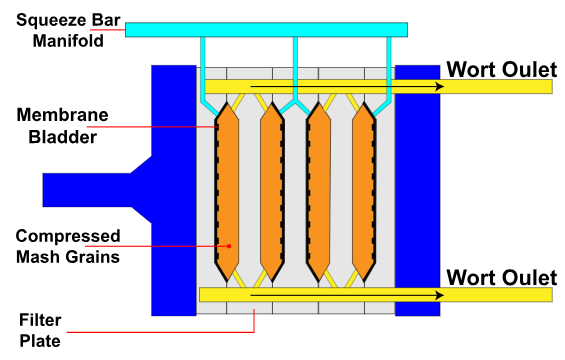
3. Secondary Squeezing (The Game Changer): High-pressure water or compressed air is injected behind the flexible membrane face. The membrane inflates, physically pressing the filter cake to squeeze out remaining capillary water.
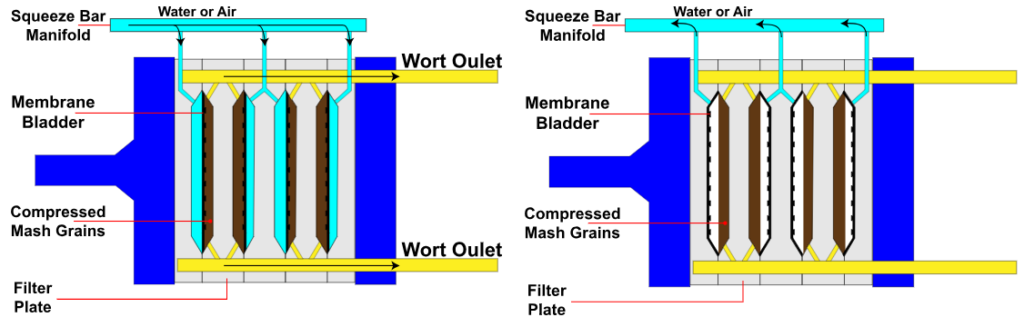
4. Air Blow & Discharge: Compressed air blows through the cake to remove residual moisture, followed by automatic plate opening to discharge the ultra-dry solid cakes.
Membrane vs. Chamber Filter Press: Why Upgrade?
| Feature | Standard Chamber Press | Our Membrane Filter Press | Your Benefit |
|---|---|---|---|
| Cake Moisture | Standard (e.g., 60-70%) | Lowest (e.g., 45-55%) | Reduces transport & disposal fees significantly. |
| Cycle Time | Long (Filling takes time) | Short (Squeezing is fast) | Increases daily production capacity by 30-50%. |
| Filtration Pressure | Max 6-8 Bar (Feed Pump) | Max 16-25 Bar (Squeezing) | Handles difficult-to-dewater sludge with ease. |
| Cake Washing | Good | Excellent | Uniform cake density ensures thorough washing efficiency. |
Key Takeaway: While the initial investment for a membrane press is slightly higher, the ROI (Return on Investment) is often achieved within 6-12 months due to savings on sludge disposal and energy consumption for downstream drying.
Technical Features: Engineered for Performance & Durability
- Integrated Membrane Plates: We use high-quality reinforced Polypropylene (PP) membrane plates. They are heat-welded or replaceable rubber options (EPDM/TPE), offering superior elasticity and lifespan.
- High-Pressure Resistance: Our standard models withstand 16 bar squeezing pressure. For extreme applications, we offer High-Pressure models rated up to 25 Bar.
- Fully Automatic Operation:
- PLC Control: Siemens/Schneider PLC systems for one-touch operation.
- Auto Plate Shifting: Discharges cakes automatically, saving labor.
- Auto Cloth Washing: High-pressure water spray bars clean the cloth between cycles to prevent blockage.
- Bomb Door (Drip Tray): Catches capillary drips during the cycle to keep your floor dry.
- Safety Interlocks: Hydraulic pressure sensors and light curtains ensure operator safety at all times.
Proven Performance in Tough Industries
Wastewater Treatment
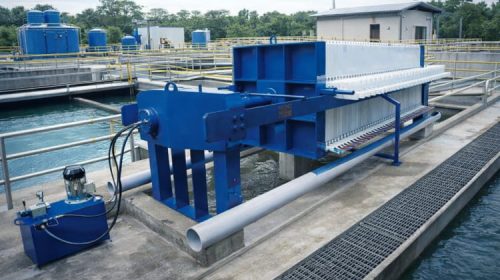
Municipal sewage sludge, textile dyeing wastewater, leather tannery effluent.
Mining & Metallurgy
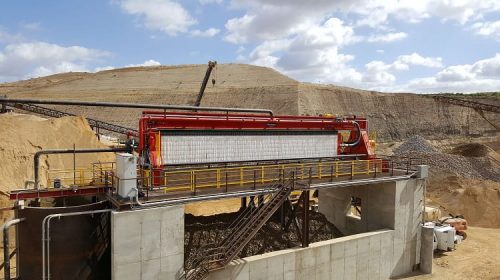
Gold/Copper/Zinc tailings, coal washing, mineral concentrates.
Chemical Industry
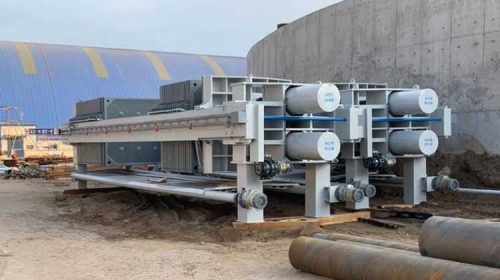
Pigments, dyes, titanium dioxide, silica, caustic soda.
Food & Pharma
Sugar refining, palm oil fractionation, antibiotic fermentation broth.
Model Specifications
| Model | Filter area (m2) | Plate size (mm) | Cake thickness (mm) | Filter chamber volume (L) | Plate Quantity (pcs). | Filtration pressure (Mpa) | Motor Power(Kw) | Weight (Kg) | Dimensions LxWxH(mm) |
|---|---|---|---|---|---|---|---|---|---|
| XMGY30/870-U | 30 | 870*870 | ≤35 | 498 | 23 | ≤0.8 | 4 | 3046 | 3880*1250*1300 |
| XMGY40/870-U | 40 | 870*870 | ≤35 | 623 | 29 | ≤0.8 | 4 | 3593 | 4270*1250*1300 |
| XMGY50/870-U | 50 | 870*870 | ≤35 | 789 | 37 | ≤0.8 | 4 | 4057 | 4790*1250*1300 |
| XMGY60/870-U | 60 | 870*870 | ≤35 | 955 | 45 | ≤0.8 | 4 | 4597 | 5310*1250*1300 |
| XMGY70/870-U | 70 | 870*870 | ≤35 | 1121 | 53 | ≤0.8 | 4 | 5136 | 5830*1250*1300 |
| XMGY80/870-U | 80 | 870*870 | ≤35 | 1287 | 61 | ≤0.8 | 4 | 5636 | 6350*1250*1300 |
| XMGY50/1000-U | 50 | 1000*1000 | ≤35 | 776 | 27 | ≤0.8 | 4 | 4352 | 4270*1500*1400 |
| XMGY60/1000-U | 60 | 1000*1000 | ≤35 | 943 | 33 | ≤0.8 | 4 | 4480 | 4770*1500*1400 |
| XMGY70/1000-U | 70 | 1000*1000 | ≤35 | 1109 | 39 | ≤0.8 | 4 | 5263 | 5130*1500*1400 |
| XMGY80/1000-U | 80 | 1000*1000 | ≤35 | 1275 | 45 | ≤0.8 | 4 | 5719 | 5560*1500*1400 |
| XMGY100/1000-U | 100 | 1000*1000 | ≤35 | 1608 | 57 | ≤0.8 | 4 | 6555 | 6410*1500*1400 |
| XMGY120/1000-U | 120 | 1000*1000 | ≤35 | 1941 | 69 | ≤0.8 | 4 | 7466 | 7260*1500*1400 |
| XMGY80/1250-U | 80 | 1250*1250 | ≤40 | 1560 | 29 | ≤0.8 | 5.5 | 10900 | 4830*1800*1600 |
| XMGY100/1250-U | 100 | 1250*1250 | ≤40 | 1975 | 37 | ≤0.8 | 5.5 | 11750 | 5440*1800*1600 |
| XMGY120/1250-U | 120 | 1250*1250 | ≤40 | 2391 | 45 | ≤0.8 | 5.5 | 12600 | 6060*1800*1600 |
| XMGY150/1250-U | 150 | 1250*1250 | ≤40 | 2911 | 55 | ≤0.8 | 5.5 | 13620 | 6820*1800*1600 |
| XMGY160/1250-U | 160 | 1250*1250 | ≤40 | 3119 | 59 | ≤0.8 | 5.5 | 14470 | 7130*1800*1600 |
| XMGY200/1250-U | 200 | 1250*1250 | ≤40 | 3847 | 73 | ≤0.8 | 5.5 | 15320 | 8200*1800*1600 |
| XMGY240/1250-U | 240 | 1250*1250 | ≤40 | 4679 | 89 | ≤0.8 | 5.5 | 16170 | 9420*1800*1600 |
| XMGY250/1250-U | 250 | 1250*1250 | ≤40 | 4783 | 91 | ≤0.8 | 5.5 | 17020 | 9570*1800*1600 |
| XMGY200/1500-U | 200 | 1500*1500 | ≤40 | 3809 | 49 | ≤0.8 | 11 | 26120 | 7140*2200*1820 |
| XMGY250/1500-U | 250 | 1500*1500 | ≤40 | 4723 | 61 | ≤0.8 | 11 | 26930 | 7730*2200*1820 |
| XMGY300/1500-U | 300 | 1500*1500 | ≤40 | 5637 | 73 | ≤0.8 | 11 | 28160 | 8720*2200*1820 |
| XMGY350/1500-U | 350 | 1500*1500 | ≤40 | 6551 | 85 | ≤0.8 | 11 | 29600 | 10110*2200*1820 |
| XMGY400/1500-U | 400 | 1500*1500 | ≤40 | 7618 | 99 | ≤0.8 | 11 | 31500 | 11260*2200*1820 |
| XMGY450/1500-U | 450 | 1500*1500 | ≤40 | 8532 | 111 | ≤0.8 | 11 | 33400 | 12250*2200*1820 |
| XMGY500/1500-U | 500 | 1500*1500 | ≤40 | 9446 | 123 | ≤0.8 | 11 | 33380 | 13240*2200*1820 |
| XMGY600/2000-U | 600 | 2000*2000 | ≤40 | 11901 | 85 | ≤0.8 | 15 | 54164 | 13030*3000*2500 |
| XMGY700/2000-U | 700 | 2000*2000 | ≤40 | 13838 | 99 | ≤0.8 | 15 | 58300 | 14390*3000*2500 |
| XMGY800/2000-U | 800 | 2000*2000 | ≤40 | 14945 | 107 | ≤0.8 | 15 | 62460 | 15770*3000*2500 |
| XMGY900/2000-U | 900 | 2000*2000 | ≤40 | 17713 | 127 | ≤0.8 | 15 | 66620 | 17150*3000*2500 |
| XMGY1000/2000-U | 1000 | 2000*2000 | ≤40 | 19651 | 141 | ≤0.8 | 15 | 70780 | 18530*3000*2500 |
* Custom sizes and pressures are available upon request. Voltage: 380V/50Hz, 440V/60Hz, etc.
Frequently Asked Questions about Membrane Presses
Q: Can I retrofit my existing chamber press to a membrane press?
A: In some cases, yes. It requires changing the filter plates to membrane plates and adding a squeezing medium (water/air) pipeline system. Contact our engineers to evaluate your current frame strength.
Q: Should I use water or air for membrane squeezing?
A: Water squeezing is safer and more stable for high pressures (>10 bar). Air squeezing is simpler for lower pressures (<8 bar) but requires strict safety controls. We recommend water squeezing for most industrial applications.
Q: How long do the membrane plates last?
A: With proper operation (avoiding empty chamber squeezing), high-quality PP membrane plates typically last 3-5 years. The replaceable rubber diaphragms are easier to maintain.
Ready to Reduce Your Sludge Moisture?
Don’t settle for wet filter cakes. Upgrade to membrane technology today. (Please include your material type and daily capacity for a faster response.)